Monday, March 19, 2007

Business community's misplaced irk

Generally speaking I have a lot of time for the points of view expressed by Canadian Federation of Independent Business and their local director, Bradley George. He usually puts forward a moderate point of view taking on some of our sacred cows more shortsighted government policies in a sensible sort of way.

Definitely he has been able to vigorously represent his member's point of view unlike some of the other local general business associations whose relationship with government could most charitable be described as cautious bordering on craven.

So I'm surprised at Mr. George's public reaction to government borrowing $1billion to put it into the pension plan. He called it "irresponsible" saying:
"This is a big black hole, that's what this is," George said of the announcement. "Fifty per cent of the taxpayers don't have this kind of pension plan, but here we are now — government is focusing on dealing with its pension problem instead of improving the economy."
I'm sorry to say that, in this case, he's dead wrong.

First, it makes good sense to bring this unfunded and open pension liability under control. This liability has been acting as a big black cloud over the province's finances and it would as long as it was not brought under control. Borrowing the $1billion and then transferring it to the pension liability does not overall increase the indebtedness of government but does make the indebtedness concrete and predictable.

Second, I'm not really sure what Mr. George is complaining about or what he's implying as an alternative. Surely he can't be suggesting that the money should have gone into grantepeneurs or make-work projects? Or is he suggesting that the government let the public pension liabilities fall into the abyss?

Surely both of those ideas are far more short-sighted and irresponsible than putting this pension liability issue to bed.

The other thing worth noting was the miserable response from government defending this $1billion decision. I would have thought that Premier Williams could have provided a more illuminating defence than an off-the-cuff response like, "I think his comment is nonsensical. I think it's ridiculous."

Not an impressive exchange on anyone's part.

Sunday, March 18, 2007

Mayor Andy Wells in Taiwan

According to VOCM, he's going to be advising the Taiwanese on different municipal issues near and dear to his heart.

His talks will include, but are not limited to, urban planning ("Experiences in Cost-Effective Municipal Infrastructure: The Mile One $tadium") and environmental issues ("Landfills - the Sensible Alternative to Recycling").

I only wish I could be there when he delivers his lecture on jurisdictional relations ("St. John's and Mt. Pearl - Lessons for China -Taiwan Relations"). And I bet he can teach them a thing or two about open and transparent voting systems too.

Conrad Black - Complex character

I can't help but have some sympathy for Conrad Black.

Whatever else you want to say about him, he's a remarkable man who amassed a world-class financial empire, gained a peerage and was an important fixture of influential society on three continents.

And as if that wasn't enough, he also found time to pen serious, scholarly and well-respected biographies including tomes on Franklin Delano Roosevelt, Richard Nixon and Maurice Duplessis.

I can't help it: No matter what kind of pompous fool Conrad Black might be, I'd still kill to have as many words at my fingertips as he seems to drop with ease.

If only he had used those powers for good instead of evil.

BC Legislative Library closing

There are some issues on which I'm fairly radical and others on which I'm very traditional and conservative in the old sense of the term. This story on the closure of the BC Legislative Library in order to free up space for more offices raises my conservative hackles

One sign of civilized legislatures everywhere is the presence of a well-organized and accessible legislative library for use by the legislators and their staff. Without a dedicated library and staff to support elected members and provide them with useful information they need on which to base their decisions, the quality of the legislative process as a whole can't help but suffer.

And when that suffers, we all suffer.

Some of the greatest libraries in the world have their roots in legislative libraries, the most notable being the Library of Congress.

I always make it a habit to visit the library of whatever legislature I visit because they represent such a fountain of information, history and knowledge about that province, state or country.

The Library of Parliament in Ottawa, for example, is not just a library. It is a stunning piece of architecture, the most beautiful room in Canada according to some, which predates the parliament building itself.

To walk through that space is to see where MacDonald, Laurier and so many others prepared for the debates that shaped this country into what it is today.

More than just being a library tourist, over the years I've spent a lot of time working in the legislative library of the House of Assembly. I know firsthand what kind of valuable resource it is for all the MHAs and their staff. Before I'd draft any important announcement or speech for whomever I'd be working for at the time, I would always touch base with the Library to see what they had on file. They always has something that improved whatever I was working on.

Even before I worked as Confederation Building staff, I made use of the legislative library as a member of the general public. Most people don't know that the legislative library staff are happy to help any member of the general public although MHAs get first priority when the House is in session.

My first contacts in the early 80's was with a fairly idiosyncratic place, which largely reflected the personality of the chief librarian who had held her post for a very long time. My later experiences in '01 and later were with a much more organized and professional institution.

In all cases I found the legislative library to be helpful, useful and a repository of information and insights matched nowhere else. I know the Center for NL Studies at MUN is also a great spot but the Legislative Library has a particular specialization which is invaluable. There are just too many publications that are available there and nowhere else.

The constituency for the continued existence of the BC Legislative Library is pretty narrow and the issues is unlikely to initiate any public groundswell of public lamentation and support for its reopening. Still, this article makes a good argument for the value of this venerable institution.

The fact that the BC legislature has closed their library without any explanation or replacement will hobble all the members of their legislature whether they realize it or not.

Breen and mis-spent resources

I see the trial of Mark Smith on the issue of allegedly tampering with Kevin Breen's campaign signs has started. For those who are not up to speed on this, check out Bond and Meeker and Locke. These prior posts have gone some way to putting this matter in context.

So you have to wonder what damage was incurred that warrants this kind of prosecutorial full-court press: $160 worth of "Lying" labels placed on campaign signs that were, in turn, corrected by $60 in "Service" labels within 24-36 hours.

It wasn't the fact that there are huge amounts of money at stake because you don't see this kind of action based on a monetary loss of $60.

And the Breen camp, quite wisely, are not making the claim that this incident was one on which the election turned because it clearly was not.

Breen was walloped by Ellsworth - 3302 votes to 2138 with even Geoff Peters hot on Breen's tail with 1876.

Pointing out the fact that Breen had promised one thing and then voted a different way on a high-profile issue might have turned the tide against Breen if those facts were a revelation to the voters but they were not. Every municipal voter with a pulse, and every voter in that ward for sure, knew what Breen had done and said on the Memorial Stadium issue.

For the voters, the only question left was whether that fact was sufficiently unimportant enough to them to vote for Breen anyway. In the end, only 2138 voters out of 7316 or 29% thought Breen deserved their vote. "Lying" labels didn't cause that.

So if the reason for this prosecution is neither monetary loss nor the cause of public policy due to a subverted election, then all that's left is just the exercise of personal influence in an over-response to public embarrassment.

And that's not good enough.

Friday, March 16, 2007

Mt. Pearl and St. John's: Not ready for prime time

Watching the debacle that is the St. John's/Mt. Pearl conflict over jurisdiction over the former Sprung lands is like watching a train wreck in slow motion. This is not just a disaster for the Mt. Pearl council, it's an even larger mess for the future of St. John's and the larger metropolitan region.

First let me make one thing clear: the answer to whether Mt. Pearl and St. John's should be amalgamated into one capital city region is: Of course they should be.

Mt. Pearl is simply a larger and more stubborn case of Wedgewood Park - a wholly enclosed bedroom suburb artificially divided from the larger municipality around it. The fact is that the long-terms interests of the region, the residents and the province as a whole lie with much tighter integration of St. John's, Mt. Pearl and eventually the smaller outlying communities like Outer Cove, Portugal Cove et al.

It's going to happen at some point and on this matter Mayor Wells is right on*. But is it going to happen soon? No chance.

But why has this become a debacle for all sides?

The town of Mt. Pearl (and it's a town, not a city notwithstanding the insistence of the Mt. Pearl boosters) is well and truly boxed in with no room to expand. For Mt. Pearl to get bigger means taking some land away from another adjoining community and that means St. John's. In reality, their effort to get the Sprung lands is their only real chance to expand.

The problem is that they can't really come up with a good reason to take it over other than simple institutional survival and that's not good enough. The adjacency point they like to make is not just a weak reason to take the lands, in fact it's a better reason for wholesale amalgamation of the two communities.

Unless they can some up with a much stronger reason than a simple "We want it", the whole exercise is worse than just a wasted effort.

The reason it's not just a wasted effort and will actually hurt their long-term cause is that by trying to make this land grab, they have revived the debate on the merits of their own existence. Note that nobody ever asks if St. John's should exist but more than a few are asking if Mt. Pearl should continue to exist as a freestanding municipality.

That's what makes this move a Hail Mary play for Mayor Steve Kent - the town either wins big or they lose big. Either they win the Sprung lands and the provincial government gives Mt. Pearl a new lease on life or they refuse the request which is as good as deciding that the long-term goal is amalgamation.

All this is a great opportunity for the members of St. John's Council to clearly articulate the reasons for amalgamation (call it marriage of communities or merger of equals or whatever is more acceptable if you prefer). It is the chance to outline a vision of the future for the region and overall be more welcoming to a new governance structure for all the 125-150k residents in the greater metropolitan region.

But alas, no vision is forthcoming. Instead the capital city's elected officials come up with a shrewish "we want the revenue" (Ellsworth), a chauvinistic "defend your city" (Hann) or a legalistic "sets a precedent" (Mayor Wells).

None of these points of view would encourage anybody to join the warm bosom that is the Gower Street bunker. In fact, might even drive a few residents out.

And lo and behold, that's exactly what's happening. Not only is the St. John's Council unable to make a compelling case for not losing bits of itself, now there are bits of St. John's that wants out.

Now Paula Schumph, who lives in the Southlands residential neighbourhood bordering Mount Pearl, has announced that services in Southlands are so bad that a petition has been circulated to turn that area over to Mount Pearl, too.

That has put St. John's into full damage control mode with Mayor Wells saying he did not know things were that bad in Southlands, and that he would meet with the area's residents. You would think that knowing that kind of thing might be part of his job or something.

It turns out that arrogantly ignoring or dismissing complaints from city residents actually have a cost after all - they might just threaten to secede at the first opportunity.

So what could have been a chance to move froward has degenerated into a counter-productive comedy of errors with the script written by a committee of the St. John's Council with some self-righteous assistance from Mayor Kent and company.

And ultimately that's why the region will see no amalgamation of municipal governing structures, however sensible that might be.

It seems like Mayor Wells and others can't help but shoot themselves in the foot at every opportunity. Just look at the way they have fought for a veto on regional waste management even though the city is a clear minority of the population.

As long as the Council of St. John's continues with the bluster, arrogant and inflammatory language coupled with a grandiose sense of regional municipal manifest destiny, the other communities will always rightly resist.

Unifying all the municipalities in the region is just a matter of time and the clock can't start running until we've seen quite a few retirements from the local stage.

----------------------------------------
*Note this day - Mayor Wells and I are in full agreement on something. What can I say; when he's right he's right.

Thursday, March 15, 2007

Just in case you were wondering. . .


This is what -60c, with wind chill, looks like in Iqaluit.

Tuesday, March 13, 2007

ABC's of economics

It only takes a cursory glance at a few public commentaries on the web or in print from the man in the street, the self-styled "policy researchers" and more than a few local public officials to see that their grasp of basic economics is shaky at best.

It's not their fault; blame a school system that gives out 80+ averages to functional illiterates*.

So for all those who want to set the province on fire with their innovative and creative policy initiatives (rubber boot/chocolate factories, aluminum smelters in the woods, fixed link tunnels, water exports etc) I suggest this site: everything you wanted to know about economics in six minutes.

It's six minutes well spent.

---------------------------------------

*More on that appalling situation to follow.

Friday, March 09, 2007

Don't call me stupid

I’m a big West Wing fan*. Besides the wonderful characters, writing and situations, the part I really enjoy is how the political situations ring true.

For example, in the episode called "The U.S. Poet Laureate", President Bartlett “accidentally” calls his likely Republican opponent, Governor Ritchie of Florida, stupid.

After an on-air TV interview when Bartlett thought the cameras were off, he described Ritchie as having a .22 caliber mind in a .357 world. In doing so, he opened a debate on Ritchie’s intelligence without getting the flack for it.

Then Ritchie does something very dumb: rather than letting the matter die after a day or so, he keeps demanding an apology and initiates other related actions thereby keeping the story alive for far longer that it should have.

The story then became Ritchie and his staff running around proclaiming about how not stupid he was. But of course the real story was about exactly how stupid he was.

You would think that kind of thing could only happen on television and never in the real world but, as luck would have it, you would be wrong.

Today on VOCM, this story popped up. I think it's worthwhile reprinting here in it's entirety:
Hickey Considers Further Legal Action - March 9, 2007

Transportation Minister John Hickey has confirmed he's looking at legal action against a regular radio talkshow caller. Hickey is already suing former premier, Roger Grimes. Now, his lawyers have contacted Morris Budgell of King's Point. Hickey told VOCM Night Line with Linda Swain the double billing allegation has been dealt with.
Once again, Mr. Hickey is running around talking about how much he is not a criminal and how dare anyone call him a criminal because you know he's not a criminal because the police have not charged him of any criminal wrongdoing because he's committed no crimes for which they can criminally charge him.

Good for him.

But while merely being not a criminal is a fundamental part of his preferred personal self-definition, this does nothing to explain his basic incompetence in double-billing one item roughly every 6 weeks.

And as long as Mr. Hickey keeps the story alive, people will continue to wonder how a man who can't balance his chequebook can run one of the province's largest departments.

--------------------
*My wife is also such a big fan that I bought her the entire series (135 episodes on 45 DVDs) for Christmas. She was thrilled to death which tells you how lucky I am in my choice of life mates

Wednesday, March 07, 2007

Sullivan defends and writes no cheque

Former MHA Loyola Sullivan has seen fit to send a letter to House of Assembly Speaker Harvey Hodder further justifying and explaining how and why it was OK for the IEC to distribute a discretionary, one-time payment of $2,875 made out to the members personally and therefore meaning that members would not need to submit receipts.

According to CBC, Sullivan says that besides all the good deeds committed by the IEC in finding all kinds of efficiencies (wholly irrelevant to the matter at hand but a de rigeur communications defence strategy) the cheques were needed because in March-April 2004 some MHAs reported they had exhausted their constituency allowances but still had incurred expenses.

This begs two important questions. First, how is it these members continued to rack up expenses after their budget was exhausted? Are MHAs not notified when their money is out and why is it OK to reward that sort of fundamental mismanagement of their own MHA budgets?

Second, and more important, why did these members run over their budgets anyway? Was it because there was an election the previous Fall? If so, does this mean MHAs have used their constituency allowances as a hidden election expense subsidy?

These are questions worth asking.

And by the way, isn't this letter really just a justification for not repaying his $2,875? It seems that the only MHAs who received the money, with the notable exception of Jack Harris, are the current members; former MHAs are on their own in deciding that.

Sullivan seems to have declined to do so.

Politician sues former politician for defamation

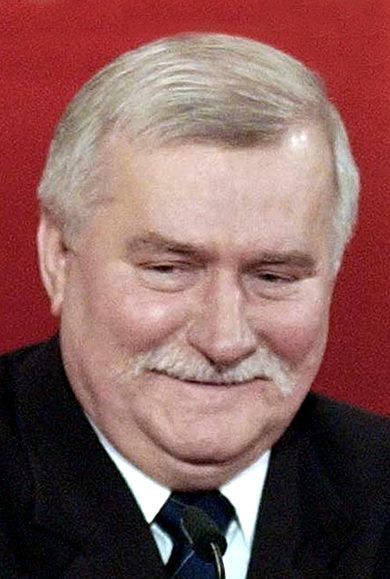
Former Polish president Lech Wałęsa has said he is not going to retract his remarks in which he called the current president Lech Kaczynski ‘an imbecile’. Other reports have Wałęsa calling him an idiot, blockhead and a fool.*

"I felt Lech Walesa's statement overstepped the bounds of permissible criticism of the head of state and was meant solely to malign the president," PAP news agency quoted member of parliament Jolanta Szczypinska as saying.

I guess what they really meant to say was that Walesa stepped over the line.

Poland is not the only place where politicians use defamation suits to silence critics. The government of Singapore is notorious for suing critics into jail or bankruptcy or otherwise out of political existence. Thailand's politicians are also keen to resorting to defamation charges where they can.

Even if they don't win their case, the costs of legal defence can be crippling.

In Poland, Thailand and Singapore, these defamation actions are pursued as criminal offences where jail time can and have been imposed on top of any monetary damages. In Poland, for example, you can go to prison for 3 years if you insult the head of state.

In Canada, defamation tends to be a civil matter where the worse that can happen is the award of monetary damages. That must be a great relief to some.

Defamation actions between politicians tend to be confined to nations where the democratic system is weak, disreputable or immature. Rarely do you see these actions in western mature democracies but while it can happen, these cases tend to be thrown out pretty early in the game because the benefit of the doubt is given to fair comment.

You see, in most mature western democracies, politicians learn that fair comment and the public interest in critical speech trumps any feeling of personal annoyance they might feel for getting called out. While they may publicly respond to charges in a clear and unequivocal manner, in the end they understand and accept that the true measure of their standing in the long run will not be the decision of a court judge but in the will of the electorate.

---------------------------
*I assume they were all the same incident but simply translated differently. Makes you admire what a colourful language Polish can be.

Monday, March 05, 2007

Quebec election seat predictor

There were a couple of these floating around last federal election and now Hill and Knowleton have a variation for this Quebec general election.

They are really cool toys if you are a hardcore political junkie.

We've heard it before

Another day and another story about how this province is hostile to business interests, economic investment and industrial development. These stories have been coming out from one source or another for almost as long as this government has held office.

They tend to spike right after the Williams administration undertakes some flurry of activity with respect to any of FPI, oil (Hebron and Hibernia South), or minerals (Voisey's Bay) among others.

National analysts, commentators or investment advisers will be quoted as wondering how serious this government is about attracting investment then the predicable government responses are trotted out. Sometimes it's a flat "we are standing up for the people of the province" but this time it was "it's just not true anyways".

In this case the government has tasked Business Minister Kevin O'Brien to try to repair our reputation.

The interesting part is that he went on VOCM Open Line to make his defence.

In fact, VOCM Open Line is the wrong audience; he should making his case where the out-of-province business audience is; out of province. To call VOCM Open Line was just a first-line knee-jerk attempt to stave off embarrassment in the local audience.

It doesn't matter how many open files he throws up in defence. The fact is that this province continues to be the only jurisdiction about which national stories currently circulate in the media that we are business-hostile.

And it's not like those who make make investment decisions in this country read a different media than the rest of us.

Reputation and image is what branding is all about. This government continues to fuel a brand that tells the world that this province is negative to economic investment. That's not the way to win in a globally competitive investment environment.

"No more giveaways" is rapidly becoming a joke codeword for "can't close the deal" and "can't play with others".

Saturday, March 03, 2007

Don't mention the war II

As mentioned previously, it seems like any questioning our genetic/historic right to take seals inspires a total shut-down of any common sense or perspective. We will come up with the most ridiculous and offensive over-the-top attacks on the anti-sealers in our efforts to justify our actions.

We can't help but play into their hands as they show us up as wild-eyed lunatics ready to club anything and anyone.

That brings us to the award of Runner-up for the next chauvinistic, short-sighted insensitive fool to break the silence and talk about how ungrateful those Germans were after all we did for them after the war and besides, those disgraceful people caused the Holocaust!

(Mr. William Rowe won the first-out-of-the-gate award on Thursday)

The envelope please. . . .

Mr. Wayne Osmond of the Table Mountains blog. In his winning entry he argues, illustrated by an image of the gates of Auschwitz that:
"The Germans are now becoming a part of a group that seems to want to enforce cultural GENOCIDE on our province (they actually use to have a monopoly on it at one time. old habits are hard to break)."
Congratulations to you, Mr.Osmond, for comparing the plight of NL sealers to that of a people who, thanks to a psychopathic and murderous regime, lost 6 million or more of their compatriots to poison gas, gunshot and starvation and then had their corpses disposed of in massive ovens.

You can rest assured that your hasty and ill-advised comparison of that human catastrophe to the recent banning of the import of an agricultural product by the government of Germany will be successful in offending Jews and right-thinking people everywhere and will do nothing to bring support to your side.

Let's see who will get an Honourable mention. After all, March madness is just beginning.

Now more than ever: A public inquiry

I have been ruthlessly consistent on one matter since this mess at the House of Assembly started to unfold - we need a public inquiry. And I still strongly believe we need one. In fact, I believe that today even more than ever, in spite of the fact that virtually every sitting politician and many of the local pundits pooh pooh the idea.

Why?

For one thing, there is a general misunderstanding, fostered by the government handling of this affair and then echoed by otherwise skeptical pundits (most notably Randy Simms, I'm sorry to say) that all these different events are separate and unrelated.

Government has treated and sold the different components of House of Assembly misbehaviors (an IEC run amok, overspent constituency allowances, misspending at staff-owned trinket companies etc) as if they had nothing to do with each other. Government's response of setting up separate and discreet mechanisms of investigation independent of each other has reinforced this illusion.

So while Justice Green examines compensation issues, the AG uncovers IEC bad judgment and the police look at gross overspending, who's tying all these matters together? And are they all tied together?

You bet they are tied together and don't ever let anybody tell you otherwise. Theses and other matters are tied together in three distinct ways.

First, it has been little acknowledged that the House of Assembly and related staff and the location where they all work is really a very very small place, physically and in numbers of people.

The number of people with decision making powers on the IEC would total far less than a dozen people over the 10 years these shenanigans went on. And the IEC is the body which approved spending as it went along and then later approved the substance of the accounts after the fact.

This puts the IEC at the center of each and every scandal revealed so far. And it was not one IEC that overlooked the sales to staff-owned firms and another which presided over gross constituency allowance overspending. It was, essentially, the very same IEC which had largely the same representatives (Byrne, Sullivan, Rideout, Parsons, Tulk and others) for remarkably very long periods of time.

Second, it is a very small set of staff which overlooked all the financial aspects of the House of Assembly. Any staff allegedly involved in malfeasance are the very same staff which advised the IEC that it would have been OK to take more money from one line item to their own pockets. In fact, it would have been the same staff overlooking the books at the AG who could have advised the IEC that it was OK to threaten a budget cut if the AG's office didn't come into line.

These staff were important advisers to the IEC on House financial affairs and we cannot assume that their advice was not tainted and disinterested.

Because the staff is so small, so prominent within that organization, so consistent over long periods of time and thereby so close to their political masters, the line between them blurs. The idea that politicians were victims of a heartless system (a la Kathy Goudie) is self-serving to put it most charitably.

Finally, this is a tangly mess in which many the players overlap the many different individual scandal items. That's because that's the kind of place the institution of the House of Assembly is: close, tight-knit across party lines and staff-politician lines, incestuous and clearly out of touch with the real world.

A culture of fundamental self-interest has developed within this small family of staff and politicians and it has harmed the practice of politics, democracy and public policy for the province as a whole. To make the case that all these items of poor judgment or potential criminal action are unrelated and separate is to draw artificial and arbitrary lines which are pure and convenient fiction.

So it is little surprise that the best the Liberal caucus can come up with after several days is the considered opinion that:
"Finally, with respect to the issue of holding a public inquiry into the operations of the House of Assembly. Our caucus feels that this may be a valid process, however, we feel that consultation should take place with the Auditor General and Chief Justice Derek Greene to figure out whether they feel a public inquiry would access additional information and assist in their ongoing activities. There needs to be a definitive goal as to what this inquiry could accomplish, and we feel that both the Auditor General and the Chief Justice would be in the best situation to judge whether this inquiry would be of benefit and provide new information to the general public."
In other words, a public inquiry if necessary but not necessarily a public inquiry. And even then we think it's a good idea only if others already do.

Way to go.

Clearly the Liberal caucus have decided to take themselves out of the game on this issue and it's just as well. Their suggestions on reforms going forward are fine as far as they go but on the issue of what has happened so far they close ranks with their colleagues on the other side.

Most offensive is Tory Caucus Chair Bob Ridgley's response to the Liberal proposals that “This is almost akin to asking the foxes to have a meeting to discuss security at the henhouse,” and his insistence that that the decision to kick the auditor general out of the legislature was made during the Tobin years, when there was a majority of Liberal MHAs on the IEC.

This flys in the face of the record which clearly shows that there were also two Tory members on the IEC when that happened and that the law change confirming the decision to eject the auditor general passed the legislature unanimously.

There is plenty of blame to go around.

The problem is that government and opposition have been more concerned day after day with "managing the issue" through various forms of damage control and in throwing the responsibility to to any shoulders than their own than getting to the bottom of the matter.

Why has the Premier been so intent on a policy of containment? He has to be given the credit for bringing in the AG in the first place (no doubt against the wishes of some of his most senior ministers - Ed Byrne for one) but I have no doubt that he had no idea of the magnitude of what was going on.

On that basis, credit only goes so far.

It is in the responses to allegations where credit is earned and so far his response ha been a mixed bag. As the information comes out, the premier himself finds himself in a conflict between getting to the bottom of the matter and sacrificing one senior minister after another who was at the center of IEC decisions (Byrne, Sullivan, Rideout et al) on one hand and the simple preservation of his administration's ability to govern on the other.

As revelations continue to be released (and make no mistake, there will be many more to come), Premier Williams is running out of fingers to stick in the dike, if he hasn't already.

In any case, the Premier is no longer a disinterested revealer of past events before his time and has not been for a while. When the bonus payments were revealed, for example, Premier Williams himself waffled on what he knew and when he knew it.

And let's not even mention the fact that Sullivan had the AG's report on these secret bonuses, which he approved as a member of IEC, on his desk when he decided to resign.

Funny he never mentioned that on his way out.

It's time to take all of this mess out of the hands of the politicians. The Liberal caucus has firmly passed the buck to others in an astonishing display of political cowardice and self-interest so their opinions on this matter have to be taken for what they truly are - irrelevant.

Government and Premier Williams have to break the mindset that these are issues to be managed and wake up to the fact that these are matters to be untangled in a systematic, objective, disinterested and comprehensive public inquiry so we can all find out who made what decisions when and who knew about it so this kind of thing can't happen again and those persons and institutions responsible are identified .

We deserve that; it's our money.

Heading North

This my time of the year to head back to Iqaluit. Their territorial Legislature is opening again this Tuesday so on Monday morning I fly back up.

While my view of local affairs might be more virtual than direct, my posts will be as regular or perhaps even more frequent.

Meanwhile, I look forward to the -20c to -30c air crystallizing my lung tissue.

TownieBastard: I'll give the Timbits another crack.

Thursday, March 01, 2007

Don't mention the war

If you ever saw the episode of Fawlty Towers where the German tourists were buzzed about by owner Basil Fawlty and Basil desperately trying to not offend and telling everyone not to mention the war and Hitler, you'll get the reference.

So when Scott Simms, MP, comes up with the inspired notion of launching a ban against German agricultural products (deer related stuff of some kind) in response to their recent vote to ban sealing products from Canada, it was just a matter of time.

I held my breath. Who would be the first chauvinistic, short-sighted insensitive fool to break the silence and talk about how ungrateful those Germans were after all we did for them after the war and besides, those disgraceful people caused the Holocaust!

And the winner is. . . Mr William Rowe, former provincial cabinet minister, former Leader of the Opposition and Rhodes Scholar extraordinaire on his very own radio call-in show (Back Talk - Radio with Attitude) this very afternoon.

Believe it or not.

Even Minister Rideout, with rare presence of mind and uncharacteristic restraint, only called the German position hypocritical.

OffalNews blocked in China

It turns out that if you happened to be traveling in China and wanted to check for the latest musings on OffalNews you'd be out of luck.

That's because OffalNews has been deemed by the government of China too dangerous for general public viewing.*

I'd like to say that it's personal, that I somehow offended the Beijing powers-that-be with some scathing post. I'd get some comfort if I knew it was because when I was there in 1984 that I had picked a fight with some lackey who has now risen to a position to get me back.

I would be proud of the fact that I was considered sufficiently dangerous and subversive to billions of Chinese and the oldest civilization in the world to merit this special treatment if only that was the case.

Alas, it's not personal at all.

It turns out it's just a manifestation of the Great Firewall of China. This firewall is a government policy and programme to make sure that certain classes of websites (ie western news media sources and blogs) and certain internet search engine keywords (ie democracy or Tienamen Square) are systematically blocked or redirected.

The idea is to prevent access to these sites, information and ideas by computers and people within China.

That's what happens when you have a government determining what lines one can cross.

If you want to test which of your favourite sites can be viewed by the billions of Chinese who might want to, see www.greatfirewallofchina.net.

----------------------------------------------------------

I was wondering why my hit counter wasn't reflecting the billions of page views that it should be - now I know why.

Wednesday, February 28, 2007

Cochrane speaks out

It's unusual for a prominent media personality provide an insightful longitudinal analysis of the public environment in any manner other than bland and innocuous.

Then there was the presentation delivered by David Cochrane at a recent Board of Trade luncheon. He was good enough to release the text of it to Meeker on Media so the rest of us who couldn't make it to the event could check it out.

Read it here, then read it again.

I've heard him speak before and he again touched on a favorite theme of his - in the conflict between politics and business, business stays silent.

And it's not for the reason you might think; business is not wholeheartedly behind the controversial business policies of this government at all.

Rather, as Cochrane points out, the local business community prefers to complain about government policies privately and to thereby vacate the public battlefield to leave the politicians dominant instead of participating in the debate on the best direction of the province.

When you take them aside to ask why, besides the fear of some kind of unspecified retribution for public criticism of the premier and his government, the most common reason local business leaders offer is fear of that magic number of 70% support for the premier.

The problem with that is that it becomes a self-fulfilling prophecy. As long as the business community stifles itself and leave their position unstated, the government's point of view will always dominate because that's all that the population ever hears.

We have to remember that these popular support numbers don't always mean what we think they do and that they can change on a dime: in 1988, Premier Peckford received massive popular support for Meech Lake and just 12 months later Premier Wells received massive popular support while holding an exactly opposite position.

And while you would think the Boards of Trade or provincial Chamber of Commerce would have something to say about a government which has repeatedly turned down opportunities for economic development with bland platitudes about "no more giveaways", they don't.

Instead they respond with bland platitudes of their own and indulge in safe debates on a new statutory holiday in February.

And by doing that they let down their members, they harm the body politic by failing to exercise their role in the public life of our province and have no claim to call themselves business leaders.

Sunday, February 25, 2007

The IEC: The bad and the ugly - No good here

Every half-way serious blog on NL affairs (and some silly ones too) are all abuzz over a great Telegram coup: a feature-length and detailed retrospective of the antics of the IEC.

I know I rag on them from time to time but the reality is that the Telegram stands head and shoulder above all print media alternatives. I tip my hat to them and especially the author, Rob Antle.

The full story is here (let's hope they leave it up for a while but reprinted below in case it's not).

If there was ever an argument for a full public inquiry, this is it.

Expect the fall-out from this story to carry on for a while assuring this government another bad week as we go into another by election.

-----------------------------------

SYSTEM FAILURE

ROB ANTLE, The Telegram
Saturday, February 24, 2007

Behind closed doors

The province’s MHAs privately changed the rules on their entitlements over the years, reducing transparency and accountability - and setting the stage for the spending scandal that now grips the province. Here's the story of how that happened.

The politicians on the legislative committee governing the House of Assembly were not pleased.

A newspaper article had dared to raise questions about constituency allowance spending by Newfoundland and Labrador MHAs.

The story questioned what the members were claiming as legitimate expenses - reportedly snowmobile suits, sweatsuits and running shoes, for example - and the secrecy shrouding the system.

The members of the Internal Economy Commission, or IEC, were so unhappy they considered compelling the newspaper reporter in question to appear before the bar of the House for questioning.

There he would testify; there he would reveal the source of his information.

This sequence of events did not happen in 2006, when Auditor General John Noseworthy began dragging the murky secrets of constituency allowance spending into the cleansing light of day.

Try 1991.

Reporters were asking questions about constituency spending 16 years ago.

But they weren't getting answers.

And the system was set up to keep it that way.

The politicians who made the rules would also enforce them, effectively with zero oversight.

As the years passed, MHAs quietly slid beneficial rule changes through the legislature. They ultimately passed a law allowing themselves carte blanche to bump benefits as they pleased, without even having to go to the House.

They also unanimously passed legislation taking the oversight of the comptroller general out of the claims process.

That same law change now infamously allowed the IEC to keep the prying eyes of the auditor general out of the books of the House.

Constituency allowances were surrounded in secrecy from the beginning. That secrecy grew worse over the years.

And a direct line can be drawn between that secrecy and lack of accountability and where we are today - with the Royal Newfoundland Constabulary conducting no less than six investigations of former or current politicians and companies, and Newfoundland Supreme Court trial division Chief Justice Derek Green set to recommend changes to the system that allowed it all to happen.

Green will look forward, at the way things should work in the future.

What follows is a look back, at how we got here.

•••

In April 1989, the Clyde Wells Liberals ended 17 years of Tory rule. A month later, new Speaker of the House Tom Lush announced the creation of a commission to examine MHA salaries and benefits - an initiative that dated back to the previous government.

According to Telegram reports at the time, Lush noted that Newfoundland politicians were underpaid compared to their peers elsewhere in Canada in virtually every area - salary, indemnity and allowances.

Former Memorial University president M.O. Morgan was selected to head the panel. Morgan said no public hearings would be held.

MHAs at the time received a sessional indemnity of $28,811, plus a tax-free allowance of $14,405. They were also entitled to a district allowance of between $1,200 and $6,000, depending on the geographical makeup of the area they represented.

The commission examined whether politicians' salaries and benefits were enough to attract "individuals of the needed quality" into public life.

The Morgan report noted the "dramatically increased" demands placed on MHAs by their constituents, and the growing complexity of the job.

"Steps must be continually taken to lure capable and competent men and women into the political arena," the report noted.

The Morgan report raised MHA salaries to $35,000, and the tax-free allowance to $17,500 - an increase of more than 20 per cent. The report advised tying future raises to those in the government's executive payment plan.

The commission acknowledged it could be criticized for setting the salary bar too high: "... there may be, no doubt, those who will protest that our recommended level of remuneration is too high, that it will in fact attract undesirables who have no desire to contribute but to receive."

But the panel stood by its decision.

More critically, the Morgan report wiped out the district allowance, and replaced it with a new constituency allowance system.

It set down the rules for members' travel - both to and from their districts, and within them.

The commission broke such expenses down into a number of categories. It recommended payments of per-diems for rural members when the House was in session. It also enacted severance pay for any MHA who served at least seven years. And it recommended payments for serving on legislative committees.

But most importantly, it advised the creation of an "accountable constituency allowance," with the IEC determining the amount.

The recommendations of the Morgan report were "final and binding."

The report's authors acknowledged that the constituency allowances, in particular, could be difficult to govern, especially in the realm of travel claims.

Their words would turn out to be prescient.

"We are aware, of course, how difficult it is to police expenditures where receipts may not be provided, as for car mileage, and the tendency for the public to mistrust. Though honesty cannot be legislated, exposure to the attempt to defraud should be reduced to the minimum possible.

"Receipts should be required, and if no receipts are submitted for certain types of expenditure, some form of verification should be provided. For what is at issue is not the honesty of the individual member, even though sometimes the odd case of false claims may occur, but the confidence of the electorate."

Years later, a committee of politicians would change the law, and make a mockery of that warning.

•••

In 1990, the IEC - which is comprised of Tory and Liberal MHAs, a majority of them from the government side - set the maximum amount for constituency claims at $7,500.

The committee also imposed rules on how that $7,500 could be spent.

Up to $5,000 could be used for things like office rentals, secretarial assistance, furniture, equipment and office supplies. Receipts were required.

A maximum of $1,000 could be spent on non-partisan newspaper and radio advertising, flags, pins and Christmas cards. Again, receipts were required.

The remaining $1,500 was discretionary, but required receipts.

The $7,500 limit on constituency spending remained in place throughout the Clyde Wells era.

It did not include travel benefits, such as mileage and per diems.

Over the next number of years, the IEC made a number of decisions that collapsed different categories of allowable expenses into each other.

But for the most part, there appeared to be few changes that significantly bumped benefits during the Wells era.

MHAs even took pay cuts in the early 1990s, for example, when the Wells government brought in a severe austerity program.

But no details of constituency spending were made public, other than the total amounts spent.

And there were a couple of controversies generated by the new expense account regime.

On July 14, 1991, the Sunday Express first raised questions about how MHAs were spending the constituency cash. Then-Speaker Tom Lush rejected the newspaper's request for detailed receipts. The province's freedom of information laws did not then - and do not today - cover the House of Assembly establishment.

The IEC was so irked at the Express story it considered dragging reporter Russell Wangersky before the House to explain himself, according to a serving MHA at the time with knowledge of the situation.

Days later, then-NDP leader Jack Harris made public details of his own constituency spending. Harris won passage to the House in a December 1990 byelection. He spent $625 - $416 on a dictaphone, $113 on UNICEF Christmas cards and $95 on photography at Government House.

"I think the answer to it all is to encourage everybody to disclose (their receipts)," Harris said in 1991.

But that didn't happen.

Although the IEC did not make the reporter testify, the commission issued a withering refusal to further inquiries about constituency spending details.

Not much further public attention was cast on the constituency claims system until 1994.

Wangersky, then with the CBC, reported on a controversy involving Liberal cabinet minister Tom Murphy. Murphy represented a St. John's district and voted in the St. John's municipal election, but claimed his permanent residence was in Tors Cove. That qualified him for additional constituency cash.

The story made a splash, but Murphy vowed to quit politics before changing his residence in Tors Cove, and no action was taken.

A few months later, on April 12, 1995, members of the IEC "directed the clerk to prepare in detail a review of the various recommendations of the Morgan commission report with a view to rationalizing the system."

The calendar pages were turning. The Clyde Wells reign was drawing to a close, and the Brian Tobin era was set to open.

Many changes to the constituency claims process were in the wings.

And those changes would fundamentally alter the system - in retrospect, not for the better.

•••

In early 1996, the IEC said it would reduce travel and constituency allowances for members.

But the commission also decided to proceed with a new "block funding" scheme for constituency claims.

Pre-1996, there were capped limits on claims in certain categories.

Post-1996, those category caps were removed.

Before, MHAs could spend a maximum of $7,500 on things like newspapers, advertising, pins, flags, office rentals and equipment.

After 1996, that cap no longer existed. If an MHA's overall allowance, including travel, was $15,000, they could spend the entire amount as they saw fit.

The new rules also clarified that it was OK for MHAs with a second home to claim accommodation expenses if that home was "within reasonable proximity of his or her district."

And they set the global constituency spending limits for 1996-97. The lowest were a number of St. John's area districts, at $8,000. The highest were Cartwright-L'anse au Clair and Torngat Mountains in Labrador, at $63,600.

The IEC also permitted MHAs to claim $2,000 per year from their constituency allowances without receipts, for "miscellaneous expenses."

In June 1996, the Tobin government passed an amendment to provincial law allowing the IEC to vary travel and constituency allowances "in accordance with rules made by the commission."

In other words, the IEC could make the rules, and change the rules, as it saw fit.

•••

Two more years passed before members of the IEC again decided it was time to look at the constituency spending system.

The IEC created a sub-committee to review constituency allowances for "members who appear to be having difficulties with their allotments." Its three members were Tory MHA Loyola Sullivan, Speaker Lloyd Snow and Liberal MHA Melvin Penney.

The sub-committee reported back a couple of months later, in June 1998. Its report was adopted by the commission. But IEC minutes contain no details of what was actually in the report.

Later in the year, members of the IEC discussed, behind closed doors, a proposed salary increase for MHAs. The commission ordered that the IEC Act be amended to provide for the same wage hikes recently negotiated with public sector workers - seven per cent over three years.

Just how all parties went about legislating that change speaks volumes about how politicians preferred to deal with salary and benefit bumps.

On Dec. 1, 1998, immediately after question period - with the press gallery empty, as reporters scrummed ministers - Government House Leader Beaton Tulk introduced amendments to the Internal Economy Commission Act.

There was no debate. MHAs voted themselves a pay raise in 41 seconds, retroactive to the beginning of the fiscal year eight months earlier.

In early 1999, the province went to the polls. The Tobin government was re-elected.

Soon after, the IEC again re-examined constituency benefits.

The 1999-2000 fiscal year turned out to be the time frame that put paid to any semblance of transparency and accountability in constituency spending.

Benefits would climb rapidly. More legislative changes were in the works to further thwart public disclosure of IEC decisions, and give the commission more power to make up its own rules on increased entitlements.

Meanwhile, the auditor general was taking an interest in members' constituency spending.

And that interest would set into motion a chain of events that ultimately led to the swirl of controversy that envelopes the legislature, and the province, today.

•••

Shortly after the election, on March 10, 1999, the IEC decided it was time for another review of constituency allowances.

A sub-committee of the IEC - this time Speaker Lloyd Snow, Liberal cabinet minister Paul Dicks and Tory MHA Tom Rideout - was created to review allowances for the upcoming 1999-2000 fiscal year.

The IEC discussed that sub-committee report two months later, in early May.

The commission decided to adopt its recommendations.

Those included an increase in the "discretionary" amount of constituency spending - the cash payment not requiring receipts - to $3,600 from $2,000.

Other measures outlined in the report remained murky.

The commission "by order adopted another recommendation of the report of the subcommittee," but neglected to mention in meeting minutes what that recommendation was.

The IEC also raised travel rates, in accordance with increases adopted by Treasury Board.

Weeks later, the IEC reviewed a draft bill to again amend the Internal Economy Commission Act.

Within days, Government House Leader Beaton Tulk tabled Bill 19, noting that "we have unanimous consent in the House to do this under a certain condition."

Tulk noted that times had changed since the Morgan commission reported on MHA benefits and salaries a decade earlier.

"It has created some problems for us," Tulk noted. "The world has changed so much since then. We now have 48 members where we once had 52. There are provisions in the Morgan Commission which do not enable us as an IEC to see that members are given the kind of resources they need to carry on their duties."

Tulk stressed that bill was not aimed at increasing salaries.

"Basically what we are interested in here is creating a situation where members in the House generally can decide on the general apparatus they need to put in place so they can carry out their duties as members."

Loyola Sullivan, then Opposition House leader, said he would "certainly echo the sentiments there in this particular bill."

Then-NDP leader Jack Harris noted that the IEC needed "flexibility with changing circumstances" to look after the needs of the House.

The repeated emphasis on the salary issue was a bit of a Jedi mind trick - the previous year's amendment to the IEC Act had already legislated wage increases through 2001.

It was also a lie. Within days, the IEC raised salaries for some MHAs anyway.

Bill 19 gave the commission the unfettered ability to hand out cash to MHAs as it saw fit.

And it set off an orgy of IEC activity within days of its passage, as the committee did just that.

•••

Bill 19 contained only three changes, but all of them would prove devastating to openness and accountability.

The first delayed the deadline for public disclosure of IEC minutes by nearly six more months, changing the accountability provision from sluggish to glacial. Some meeting decisions would now not be made public for two years.

The second effectively neutered the "final and binding" nature of Morgan-style panels examining MHA benefits. The change meant the IEC could now "implement the recommendations with or without the changes the commission considers appropriate."

The third gave the IEC sweeping powers: "The commission may make rules respecting indemnities, allowances and salaries to be paid to members and staff of the House of Assembly."

Bill 19 received royal assent on May 27, 1999.

Days later, on June 1, the IEC met. It used its newfound powers to distribute the wealth.

The commission launched a review of severance rules. It also increased salaries for MHAs holding specific offices, to match the general salary increases that the legislature had quietly voted for a year earlier.

The IEC gave raises to the Speaker, the deputy Speaker, the deputy chairperson of committees, the leader of the Opposition, the Opposition House leader, the chair and all members of the public accounts committee, and the party whips.

On June 23, the IEC raised the threshold on when equipment and furniture purchases would become property of the House, and not the property of the MHA.

The limit doubled to $1,000 from $500. Anything under $1,000 would now be the property of the politician, and not the public. But after three years, even items over $1,000 would become the property of the member.

The same day, the commission revoked the existing severance policy.

The IEC made all departing MHAs eligible for severance; before, only those who had punched in seven years of service qualified for payments. The commission also jacked up severance benefits, doubling the maximum payment to a year's salary. It also added severance payments for office holders of the House, such as the Speaker, House leaders and whips.

But the commission wasn't done there.

The IEC also created new positions for MHAs, with generous new salaries.

The parliamentary secretary to the leader of the Opposition would get a $14,500 stipend. So would the leader of a parliamentary group. Two caucus chairs would receive a cool $10,000 each.

The IEC also raised salaries for the government and Opposition whips to $10,000.

The chair of the public accounts committee got a bump to $10,000; the vice-chair, $8,000; and members of the PAC, $6,000.

To add the fiscal cherry on top, the IEC advised the Department of Finance that all of these sinecures would be considered pensionable income.

The hits kept coming.

On Nov. 17, the IEC created another new position - parliamentary secretary to the Government House leader. Salary: $14,500 per year.

On Nov. 24, the commission jacked up travel rates.

On Dec. 15, it raised all MHAs' constituency allowances for the nearly finished fiscal year by four per cent. The IEC also decided to review the allotments again before the beginning of 2000-01.

On March 2, 2000, it revoked years-old edicts against travel and accommodations benefits for public accounts committee members, allowing MHAs to make claims for additional cash.

On March 15, 2000, the IEC did what it appeared to do best - strike another sub-committee to review constituency amounts. The new sub-committee was tasked to do so for the just-ending fiscal year of 1999-2000, as well as the upcoming 12 months. Speaker Lloyd Snow, Tory MHA Tom Rideout and Liberal Beaton Tulk were the members.

The troika were told to "review the accounts of the House and if there are savings in other accounts to transfer those funds to the members' travel and constituency accounts where there is a demonstrated need."

In other words, the politicians would raid savings in other areas to give themselves additional expense money.

A week later, on March 22, the IEC tabled the constituency allotments for the 2000-01 fiscal year.

It also revised the 1999-2000 totals, even though that fiscal year was just days from being over, giving some districts a hefty bump in allowable spending. The higher totals remained in effect for 2000-01 as well.

Port de Grave, for example, had maximum constituency spending of $19,700 in 1998-99; the retroactive raise for 1999-2000 put the new total at $31,200. That's an increase of 58 per cent.

It was a similar story for other districts.

St. John's Centre: up to $14,500 from $8,100. An increase of 79 per cent.

Humber West: up to $39,500 from $28,400. An increase of 39 per cent.

The IEC also adopted another recommendation of the latest sub-committee: that the "discretionary" portion of constituency allowances be increased again, to $4,800 a year from $3,600.

That's the amount available to MHAs without receipts; the total did not include HST, effectively making it closer to $5,500.

The IEC also axed the monthly limit on "discretionary" funding.

In just nine months, between June 1999 and March 2000, the IEC voted to provide politicians with a grocery list of new benefits and entitlements.

It did so behind closed doors, with public disclosure delayed months or years from the dates those decisions were made.

But at the end of that period, in March 2000, an unwelcome visitor arrived at the IEC - the auditor general, Elizabeth Marshall.

•••

Throughout the 1990s, the Internal Economy Commission - the group of Tory and Liberal MHAs charged with administering the finances of the legislature - altered the recommendations of an independent panel report on MHA remuneration.

They quietly bumped benefits. They reviewed changes to the act governing the commission - changes which gave the IEC more power, and subjected it to less oversight. Those changes unanimously passed the legislature.

In early 2000, the auditor general, Elizabeth Marshall, began an audit of House accounts.

The first reference to this audit is found in IEC minutes of March 2, 2000. According to meeting minutes, the commission decided to research the appropriateness of Marshall's request to look at the books.

The same day, the IEC asked officials to discuss with the comptroller general how the House's financial documents were handled.

Two weeks later, the IEC met again. The commission deferred its decision on how it would handle the auditor general's request.

The commission also told the secretary of Treasury Board to divide the functions of the comptroller general's office. The House of Assembly would handle its own accounts.

On May 9, the IEC reviewed draft legislation, which it then signed off on.

Three days later, the legislature rammed through changes to the IEC Act. All three parties supported Bill 25.

"I don't intend to belabour the points in this bill much except to say that some of the language that we see in laws governing the Internal Economy Commission Act dates back to Responsible Government days," Government House Leader Beaton Tulk said.

"What this bill clearly does is set out the duties of the IEC and the kind of duties that the IEC should carry out. They are more clearly defined in this bill. I would ask my colleagues to quickly move on passing the bill."

They did. It took about five minutes to pass Bill 25.

The NDP's Jack Harris said he was satisfied with the changes.

Then-Opposition House Leader Loyola Sullivan called the bill "pretty straightforward and pretty routine," noting that it allowed for annual audits and "increased accountability."

But nothing could be further from the truth.

Here's what that "straightforward" piece of legislation did:
  • changed the language of the law so that the IEC no longer required the approval of the finance minister for its spending estimates on things like MHA salaries and other expenses.
  • directed that all House spending come from the government's general pot of money, the consolidated revenue fund.
  • gave the IEC control over what documents would be supplied to the comptroller general in order for payments to be made, and prohibiting the comptroller general from questioning those documents.
  • allowed the IEC to choose who would audit the books of the legislature, thereby permitting it to bar the auditor general.
Not much happened for the next couple of years. The IEC continued to agree on more benefits.

In December 2000, it raised constituency allowance amounts yet again, this time by five per cent.

In August 2001, the IEC authorized salary increases of 15 per cent over 2-1/2 years for MHAs, officers and staff of the House. The hike matched the collective agreement reached between government and its public-sector unions.

Then 2002 came, and the impending release of a report by the auditor general.

That report would paint a much different picture of events than the one contained in IEC minutes.

And it prompted a promise by a politician - a promise that, when carried through, would ultimately break wide open the constituency entitlement enigma.

•••

The official IEC version of events from 2000 was something like this - the auditor general asked to look at the books, the commission considered it, and ultimately decided an independent auditor should do the job. No harm, no foul.

The version of events outlined by the auditor general was less, well, routine.

In a report released in early February 2002, Auditor General Elizabeth Marshall said her staff had attempted to carry out a regular audit of constituency allowances two years earlier. The AG had always been granted access to such information, she noted. But this time turned out differently.

Instead, auditors were ejected from the House. The amendments to the IEC Act - changes that allowed the commission to bar the AG for good - whooshed through the legislature soon afterward.

The decision, Marshall noted, meant that she could not look at any supporting documentation for the $1.7-million constituency allowance budget.

Marshall told reporters on Feb. 1, 2002, she had concerns with certain expenses claimed by an MHA, involving artwork and wine. (Her successor as AG, John Noseworthy, would later shed more light on the situation, saying it involved purchases of more than $30,000 in artwork and over $5,000 in wine by a then-Liberal cabinet minister.)

Marshall said she had problems with the key changes to the act in 2000 - the removal of her staff and the removal of the comptroller general's oversight from the constituency claims process.

"Both of those processes have stopped, so in fact there's two steps backward in the accountability process," she said in 2002.

"Right now what is provided to the comptroller general is just sort of a blank sheet of paper saying please pay (this amount) to so and so."

The IEC was less than thrilled with this assessment of the situation. On Feb. 4, it issued a terse statement defending the 2000 decision to keep the AG out.

The IEC met three times between Jan. 29 and Feb. 11. There are no minutes of those meetings, other than the fact that no decisions were made.

On Feb. 15, the commission agreed that the Speaker would speak publicly on behalf of the IEC for its decisions.

Meanwhile, the Tory members of the IEC - Ed Byrne and Loyola Sullivan - were in a bind.

Their leader, Danny Williams, told The Telegram on Feb. 6 that he supported opening the books.

"They can retain their independent auditor and that's fine. I understand that is the course of action they have taken, but there is no reason the auditor general can't go in there," Williams said.

"How can I advocate openness and accountability and then try and hide members' expenses and members' allowances? I have nothing to hide, so let them go in."

The majority Liberal members of the IEC charged that Byrne and Sullivan supported the 2000 decision.

Within weeks, the IEC reaffirmed the decision to bar the AG.

Speaker Lloyd Snow indicated that stand got unanimous consent.

Williams, leader of the PC party, was against it, but was not a member of the IEC.

Sullivan contended he did not support the 2002 IEC stand to keep the AG out. But there is no reference in IEC minutes to any difference of opinion.

After the dust settled on the controversy, the IEC fired a shot across the auditor general's bow. In early March, it threatened the AG's office with a five-per-cent salary cut and an eight-per-cent reduction in operating expenses.

The most important outcome of the whole affair? Danny Williams made a promise - if he won power in the coming election, he would direct his majority members of the IEC to let the AG back in.

And when the AG got back in, some shocking details of what had been happening at the House of Assembly began to filter out.

•••

On Oct. 21, 2003, the Progressive Conservatives swept to power with 58.7 per cent of the popular vote. Two weeks later, Danny Williams was sworn in as the ninth premier of Newfoundland and Labrador.

In March 2004, the IEC reviewed a report prepared by the new Speaker, Waterford Valley MHA Harvey Hodder. Its title would soon prove especially topical - "Accountability and its Relevance to Members' Constituency Allowances."

The newly constituted IEC began rolling back some of the benefits its predecessors had put in place.

The bulk of this activity took place in a meeting on March 1, 2004.

Firstly, the commission cut all constituency allowances for 2004-05 by five per cent.

It then cut the "discretionary" spending amount for MHAs - to $3,000 from $4,800. (A month later, the IEC would reduce that amount to zero, requiring receipts for all constituency expenses.)

The commission dropped the threshold on when equipment and furniture purchases would become property of the House, back down to $500.

The IEC also decided to develop a handbook of rules, restrict MHAs from having more than three months of their allowance in advance, and provide members with written monthly statements of their account status.

The commission issued a somewhat ominous warning - that "staff of members of the House and members themselves be knowledgeable with respect to the Conflict of Interest Act and where appropriate or where in doubt on the expenditure of public funds by way of constituency allocation, they would seek the advise (sic) of the clerk or the Speaker."

But most importantly, the IEC invited the auditor general back in to look at the books of the House and its officers. That action followed through on Williams' 2002 promise.

Subsequent meetings would also result in action.

On April 14, the IEC revoked its 2000 directive neutering the comptroller general, and directed that all claims again go to that office for testing.

It also ordered an end to the practice of MHAs carrying forward claims from one fiscal year to the next.

But this welcome infusion of accountability came to a screeching halt on May 12, when the IEC agreed to pay MHAs a now-infamous $2,875 constituency bonus.

Forty-six of the 48 took the tax-free, receipt-free payment - all except Williams and Elizabeth Marshall, now a Tory MHA. The decision was worded vaguely to hide public disclosure; the payment was only unearthed years later by the AG.

And, as 2004 ebbed into 2005, the auditor general's findings would begin to take centre stage.

•••

In January 2005, Auditor General John Noseworthy issued reports critical of spending by child and youth advocate Lloyd Wicks and citizens' representative Fraser March.

Both were independent officers of the House; both were previously exempt from review by the auditor general.

Wicks stepped down in the wake of findings that questioned personal travel he charged to taxpayers.

The legislature voted to fire March over his own travel claims and consulting work he performed while holding the ombudsman's position.

But if those were grenades dropped on the credibility of the House, the warheads were soon to follow.

In June 2006, Noseworthy began issuing his series of reports on House spending.

The tally, to date:
  • five current or former MHAs from all three parties allegedly overspent their constituency funds by a total of $1.6 million, beginning in 1997. Ed Byrne, Wally Andersen, Randy Collins, Jim Walsh and Percy Barrett are all under police investigation.
  • the House made questionable payments of an additional $2.8 million to a number of companies for trinkets and baubles like keychains and fridge magnets. A key House employee was tied to one of the firms. The AG questioned whether all of the baubles even existed. The Royal Newfoundland Constabulary is also investigating these findings.
  • two more MHAs double-billed their constituency funds by about $3,700 each. Transportation Minister John Hickey has since been cleared by police of criminal wrongdoing. The claims of former Tory MHA Kathy Goudie remain under review. Both MHAs repaid the money.
  • three MHAs touched by the probe have since quit provincial politics; two cabinet ministers stepped down, although Hickey has since been reinstated to his post.
The first phase of the auditor general's review is over. No other MHA overspent their allowance between 1990 and the present, Noseworthy says. Auditors found a "significant spike" in overspending after the decision to bar them in 2000.

The second - and potentially more interesting - phase is not yet complete.

Noseworthy is now examining what MHAs spent their constituency cash on, within those approved limits.

Auditors are poring over 17,000 claims from 122 MHAs over the past 17 years.

The AG's first report - examining sitting MHAs - is scheduled for release a month or two before the October provincial election. Noseworthy hopes to have the remainder of the work wrapped up by early 2008.

The auditor general could find that all MHAs were faithful servants of the public, only spending tax dollars on legitimate items to benefit their constituents.

Then again, he might not.

•••

Danny Williams has become increasingly irritable about the mushrooming spending scandal, and the impact it is having on his government.

"Anyone got a longer rope? Because I'm getting to the end of mine," the premier said to reporters before a recent media briefing.

Williams has - quite rightly - claimed that transparency returned to House spending under his watch. He asked Chief Justice Derek Green to review MHA remuneration in the wake of the first AG report on constituency spending. He has committed to rewrite the laws that still, to this day, permit the IEC to eject auditors.

But members of his party, caucus and government were among those who went along with the changes that eroded accountability to the point of non-existence over the years. Thirty-two members of his caucus, for example, took the secret constituency bonus in 2004.

No MHA voluntarily released details of their constituency spending when asked to do so by The Telegram last summer. The Speaker advised them not to, fearing the information could become part of a widening police probe - hardly the most reassuring answer on how politicians are spending public money.

All three parties are now scrambling to sound the drumbeats of transparency. They all want future IEC meetings thrown open to the public. They want everyone to know they will follow the rules, whatever those rules may be.

But they also appear tone-deaf at times to public sentiment. Some MHAs are perplexed at why the secret $2,875 bonus is such a big deal - even though it came days after the legislature forced public-sector workers back on the job with wage freezes and concessions.

They have blamed the system for failing them. But the politicians are the ones who created the system, and for that, they have only themselves to blame.

That system lacked accountability, openness and transparency. The results are in black and white, in auditor general's reports that have broad-sided the province's political establishment.

Chief Justice Green will soon make recommendations on how things should be done in the future.

To appreciate why those changes are necessary, it's important to remember how they were done in the past.

rantle@thetelegram.com

====

More secret payments in IEC minutes
By Rob Antle

Members of the legislature's Internal Economy Commission voted to give all MHAs at least one other lump-sum payment, similar to the controversial 2004 bonus unearthed by the auditor general.

On Oct. 22, 1997, the IEC decided to hand over $1,500 to all MHAs. The cash was "in order to recognize additional expenses which will be incurred by members who will be canvassing their constituents regarding the Calgary Declaration."

The Calgary Declaration was one in a series of attempts by premiers to assuage constitutional concerns.

It followed the failure of the Meech Lake and Charlottetown accords - the most high-profile attempts to resolve the national unity impasse.

A month before the IEC agreed to the $1,500 payment, then-premier Brian Tobin told reporters that MHAs would consult with their constituents for opinions on the Calgary Declaration.

"It's important we reach out to all Newfoundlanders and Labradorians," Tobin said at the time.

In addition to the 1997 Calgary Declaration payment, there is also evidence that the IEC routinely bumped constituency benefits for MHAs retroactively, at the end of fiscal years.

Auditor General John Noseworthy found in a recent report that vague language hid a tax-free, receipt-free $2,875 constituency bonus made available to MHAs in 2004. Forty-six of the 48 MHAs took it.

There are several examples in IEC records of apparent constituency bumps near the end of the government's fiscal year (which runs to March 31):
  • on March 22, 2000, the commission jacked up constituency allotments for certain districts for the just-ending fiscal year, and the following year.
  • a March 6, 2002, IEC minute notes: "The commission directed the clerk to adjust the members' constituency allowances for the 2001-02 fiscal year in accordance with a proposal on file with the clerk." There are no further details on what that means.
  • a Feb. 26, 2003 minute says: "The commission by order approved additional allocations to members' constituency allowances for the 2002-03 fiscal year." Again, there is no more specific information on the "additional allocations."
rantle@thetelegram.com