Thursday, March 29, 2007

Danny Williams and Weighing the Cost of Lost Opportunities

I don't like to repost from another but I just couldn't take the chance this might be yanked down.

For the second time in as many months, a prominent NL journalist has expressed the thought that perhaps our emperor has no clothes.

Whether you agree or not, and polls indicate only about 20-25% might, there's no doubt that this presentation will cause more that a few ripples.

Frustration builds when independent-minded people see that there is no public debate on fundamental issues facing the province. Debate is cannot be restricted to the process of issuing pronouncements followed by a wave of scripted agreement and adulation; an echo chamber is no forum for open discussion.

I would expect more of this over the next few months as frustration continues to build; we need more ripples.
-------------------------------------------------

Weighing the Cost of Lost Opportunities
Luncheon Address by Craig Westcott to the Newfoundland Ocean Industries Ocean
March 29, St. John's

Thank you to the NOIA committee for inviting me here today.

When Harry Pride and the other NOIA committee members asked for a title to today's speech, I blurted out the first thing that came to mind: Weighing the cost of lost opportunities.

I could have subtitled it: 'Stuck in the middle with you.'

As Jeff noted in his introduction, I publish a business newspaper called The Business Post.

I started this venture last June. On the very day in fact, when Premier Danny Williams said he was feeling "annoy-yed" by NOIA.

You'll remember he uttered those remarkable words right in the middle of the annual offshore petroleum conference.

During that same conference, the premier chose to go on province wide television to announce he was firing his minister of Natural Resources, Ed Byrne.

He actually scheduled his press conference so that it would be carried live on the supper hour news.

Given the circumstances of Byrne's constituency allowances, we all know now that he had to step aside.

But you've got to wonder about the timing.

During that same convention last year, it seemed to me, in covering it, that Williams did his best to avoid attending any of the functions.

I think he actually showed up at one.

Here was the world's oil industry in town to talk about our oil and gas prospects, the very resources that are driving the economy and giving our government the kind of revenues and balanced budgets we haven't seen in years, and the premier stayed home.

Well actually it was worse than that.

He didn't just snub the industry.

He insulted the people in it, particularly the members of NOIA.

Just before that, at the OTC, Williams had done the same thing.

This was just after the breakdown in talks over Hebron.

If there was ever a time when we needed our top guy at the world's biggest oil show working the rooms and making our case, that was it.

But Williams stayed home.

Even during some of the lowest years for the oil industry in Newfoundland, the premier of the day usually went to Houston for the OTC. Because that's where relationships are made and business gets done.

We're getting ready now for NOIA's 2007 offshore conference here in St. John's.

And we already know that this coming one is going to be missing a major element.

Earlier this week, DMG Media announced it was pulling the plug on the annual international trade show that accompanies the offshore conference.

For the first time in nearly two decades, there will be no trade show during the conference.

I'm told that many companies, from the operators down to many of the local suppliers, didn't think it was worth their while to allocate money and staff to a booth.

The work just isn't here to justify it.

How's that for illustrating the title of today's talk. Weighing the cost of lost opportunities.

Like many of you in this room, I too am dependent on the local oil industry for my living.

I've published 14 issues so far of The Business Post.

One of the very best ones, revenue wise, was number eight, which was distributed to every business in this region just before Christmas.

It was our first Top 50 issue.

A look at the Top 50 players in our oil patch.

People who have invested their money, and their time and their energy, their precious life energy, into building a new industry for Newfoundland.

An industry that pays better than average salaries.

An industry that provides government with better than average revenues to pave roads, and fix schools and buy equipment for hospitals.

An industry that means a bright future for thousands of young Newfoundlanders who want the choice of staying at home for work instead of having to leave their parents and friends to move away.

And not just young Newfoundlanders. But people my age and older too, who find themselves commuting to Alberta, or moving North for work in increasing numbers, now that Danny Williams has all but killed the near and medium term prospects of this industry.

Where did it all go wrong?

Before I try to answer that, let me make one thing clear.

I am not aligned with any particular party.

Over the years, I've voted for all of them at one time or another.

I even published a short-lived, official PC Party newspaper when Loyola Sullivan was leader.

So what I'm about to say is not partisan and it's not meant to be personal or negative towards Danny Williams.

But it's impossible to avoid being negative about a leader who is so negative himself, especially about his critics and some of the people who try to do business in this province.

Getting back to where things went wrong, I would argue that it all started nearly four years ago with the election of a new government.

Those of us who live here will remember that four years ago, the consortium of oil companies that have the development rights to Hebron were just getting ready to tee-up Newfoundland's fourth big oil project.

This was two years after 9-11 in the 'States.

The Americans were at war.

Oil prices were inflating as a result of all the growing risk in the world.

The United States government itself was looking for more secure energy supplies.

The time was never better to start a new oil project offshore Newfoundland.

Then Danny Williams came to office.

He was full of dreams to make Newfoundland prosperous and to, as he put it, "end the giveaways."

Laudable goals.

Then last spring, after months of negotiation, Williams called reporters together to say there would be no deal on Hebron.

Only one side was negotiating in good faith, said the premier.

And that was the government.

For their part, the consortium maintained that never before had a group of oil companies offered as valuable a package of revenues and benefits to Newfoundland for the privilege of developing one of its oil fields.

Clearly, there was a communication breakdown between the two parties.

They couldn't even agree on what they had disagreed about.

Stuck in the middle were the rest of us. Many of whom had spent thousands and in some cases millions of dollars and precious time getting ready to bid for work on Hebron.

To this day, neither the premier, nor the oil companies, have revealed exactly what happened during those talks.

But what happened afterwards is plain to see.

The premier has made a campaign of attacking what he calls, "Big Oil."

Big Oil is out to get us, if you believe Danny Williams. To take advantage of us, to put one over on us like Hydro Quebec did at Churchill Falls.

If you believe Danny Williams, Big Oil is the Bogeyman hiding under our beds, waiting for us to fall asleep, so that it can sneak out on the Grand Banks and rob all the oil.

Now I'm no expert on high stakes negotiations.

But it seems to me, a common principle of business, whether you're selling hot dogs out of a cart on George Street or trying to get a major oil company to develop your resources, is that you treat your prospective partners and customers with respect.

It's not uncommon for negotiations to fail.

Negotiations often fail.

A good deal, as we all know, should be a win-win situation for everybody.

Sometimes that's not always possible.

But when you don't reach a deal, how wise it is to publicly vilify the people you were negotiating with?

It would be like me going into Hickman Motors or Penny Mazda and after looking at all the cars and haggling over the prices, deciding not to buy. For the moment.

I say for the moment, because at some point, I'm going to have to get a new car.

So how sensible would it be for Bert Hickman or Dan Penney to call a news conference and say, 'We couldn't reach a deal with that guy Westcott. He was negotiating in bad faith. He didn't want to pay a fair price for our car. But we decided there would be no more giveaways."

What are the chances of me returning to either one of those car lots if something like that happened? Is that the way to do business?

We all know what's happened since then.

Chevron, the lead operator on Hebron, has all but pulled out of Newfoundland.

ExxonMobil, one of the other partners, has shuffled its checklist of projects, tucking Hebron/Ben Nevis back to 2010 or 2011 before it gets another look.

Hibernia South is on hold.

Even worse, grassroots exploration is at a near standstill.

We need millions of dollars worth of seismic work and exploration drilling every year to find the next big oil field, but we're getting diddly.

It looks like Big Oil has given up on Newfoundland, at least for the time
being.

It appears the oil companies, which have projects all around the world they can chase and advance, are content to wait Williams out.

And if you look at our recent past history, that may seem like it makes sense.

Most premiers don't last all that long.

Brian Tobin lasted four years. Roger Grimes two. Even Clyde Wells, the man of iron will who stared down the country over Meech Lake lasted just over six years.

Most premiers don't last very long. The job burns you out.

But Danny Williams isn't like most premiers.

I've covered politics in this province for 20 years.

I was in the boardroom on the eighth floor of Confederation Building when an exhausted and frazzled Brian Peckford was on the verge of getting out.

I covered Clyde Wells during the hydro debate and the fight over Meech Lake.

I had the pleasure of watching Brian Tobin run to a waiting car to get away from me so that he couldn't face any more questions.

All those guys liked power, but power wore them out.

Danny Williams is a different kettle of fish.

Danny Williams loves power.

He lives for it. He revels in it. He likes to show everyone he's the boss.

All those other premiers I mentioned had their brown nosers and their sycophants.

It was comical after Clyde Wells came to power, how many of his cabinet members waltzed around using the word unconscionable, which was Clyde's favourite phase.

When Tobin was in office, his people were always busy "ramping up" for great things that were going to happen "at the end of the day."

The brown nosers have a way of taking on their leader's mannerisms and pet phrases.

And so it is with this crowd.

Everybody in the PC Party today is "drilling down."

I don't know where they are drilling towards exactly, but I think a lot of the time it's towards the latest phone to call VOCM Open Line.

The Minister of Business, Kevin O'Brien, and the Member for Terra Nova, Paul Oram, seem to have been assigned to monitor the open line shows religiously and to call up whenever anyone utters a bad word about the premier.

Maybe that's what drilling down means.

But you know, most good leaders are sensible enough to know that along with the flatterers and opportunists who inevitably jump onto their coat-tails, they need other leaders with them to share the load.

People who are not afraid to argue a point, or tell them things they don't want to hear.

Frank Moores had John Crosbie.

Brian Peckford had Bill Marshall.

Clyde Wells went and recruited Ed Roberts back from private life and drafted him into his cabinet as an un-elected minister, because he knew the value of wise counsel.

What has Danny Williams done?

He's done just the opposite.

Anyone who is as strong or as smart as he is has been isolated, or forced out.

He expelled Elizabeth Marshall from his cabinet three years ago because she had the audacity to object when he interfered in her department without telling her.

The woman had been Auditor General of this province for 10 years.

She was a deputy minister before that. And a chartered accountant. Nobody in his caucus is more respected, or knows government better.

But none of that matters, because she stood up to Danny Williams and now he won't have anything to do with her.

It's been three years since their spat and she is still on the backbenches.

Most of us know that Loyola Sullivan was a pretty bright fellow.

If you believe the inside accounts of what happened during the Atlantic Accord negotiations, it's clear it was Sullivan who presented the key arguments and had all his facts and numbers in line.

Yet, when Sullivan resigned as finance minister at the end of last year he got absolutely no credit for it from Danny Williams.

'Loyola was a good minister,' Williams told reporters. 'When I was negotiating the Atlantic Accord, he always did what I told him.'

Folks, Danny Williams loves power.

He feeds on it.

He's addicted to it.

And like most people who love power that much, he'll do anything to keep it.

And do you know what the really scary thing is?

He has a lot of people fooled.

He loves their adulation, whether it's deserved or not.

The fishery is dying.

The forestry industry is struggling.

Rural Newfoundland is shrinking by the day.

And he's all but killed the economy's real breadwinner, the oil industry.

And what is Danny Williams doing this week?

He's campaigning against the Prime Minister in a federal election that hasn't even been called yet.

And why?

Because he's got people fooled into thinking that he is fighting for them.

He lives to hear himself praised.

I suspect he listens to the open line as much as Kevin O'Brien does.

I know he follows what people are saying about him on the blogs. He has even threatened to sue some of them!

He's making time for that apparently, during his busy day.

Danny Williams is another Joey Smallwood.

Whenever things were going terrible for Joey on the home front, when the factories he imported weren't working, or some minister was involved in a scandal, Joey would look for an enemy from the outside.

Like island populations everywhere, Newfoundlanders rally when they perceive a threat from the outside.

For Joey it was John Diefenbaker or H. Landon Ladd of the I-W-A.

For Danny it's Big Oil and Abitibi and Stephen Harper and whoever else happens to stand up to him.

Nothing is being done at home to develop this economy, because Danny has all guns now trained on Ottawa.

I'm too young to have been in business when Joey Smallwood was premier.

But I am told by people who know and whom I respect, that Joey was a vindictive man.

That you had to be a friend of Joey to get a contract with government, or even to get a job in the civil service.

You had to be Joey approved.

Well, it's been 36 years since Joey left office.

We've had reforms such as the Public Tendering Act, implemented, directly as an effort to rectify those kind of abuses.

But if you ask me, Joey is back in power.

I happen to coach two minor hockey teams.

So I spend a lot of time in hockey rinks throughout this region.

I spoke with a man one day, a consultant, I won't say who, because I don't want the wrath of the premier coming down on him.

But he said to me that that people in his business are growing increasingly nervous about bidding on government work.

There is a real fear that things might reach the point where you could spend thousands of dollars and hundreds of hours preparing a bid on a government job that might all be in vain if you are deemed unfriendly to Danny.

People are afraid that the quality of their work, or the price they submit may not count when they look for business with government.

Some people are genuinely afraid that the real deciding factor might soon be whether they are seen to be a friend or foe of Danny.

You see, with politicians like Danny Williams, you're one of two things: You are a friend, or you are an enemy.

He doesn't allow you the luxury of being independent or unaligned.

I know this from personal experience.

As I've said, I've been covering politics in Newfoundland for 20 years.

I've covered seven premiers.

I've written things about Roger Grimes, for instance, that were truly hurtful.

No doubt I made him angry.

No doubt, like other pundits, I wounded his pride.

But he was always professional.

Danny Williams isn't.

Danny Williams can't take criticism.

A week after I wrote a column about his handling of the F-P-I debate in the provincial legislature, his press secretary informed me that I was being cut off from all future interviews with the premier.

She said I was unfairly critical. That I should have checked with the premier before running my column.

She has since phoned a number of the publications I write for to tell them the premier's office has nothing to do with me.

Telling them, in other words, you shouldn't do business with this guy, if you want to continue to have access to the premier.

Likewise, the business I started last June.

The Business Post is mailed to every business on the Northeast Avalon.

Every issue, I pay Canada Post to mail a copy of the paper to every business in St. John's, Mount Pearl, Conception Bay South, Paradise, Torbay, Portugal Cove-St. Philips and the Goulds.

The paper is distributed at most major business events in the city as well as at trade shows in Vancouver, Toronto, Montreal and this coming May in Houston.

In other words, The Business Post is hitting the target audience of anyone who wants to reach a business clientele.

And yet, the paper has not received one ad, not one ad, from the provincial Department of Business, or the Department of Innovation, Trade and Rural Development.

And it's not from lack of asking.

These two departments advertise their business funding and assistance programs all the time in other publications.

But they won't advertise with me.

Why?

Because I have dared to criticize the Great Leader.

Under the regime of Danny Williams, you pay a price for being independent.

And it doesn't matter if you're as big as ExxonMobil or Bell Aliant, or as
small as the local media outlet.

You've got to watch your Ps and Qs, stroke his ego, be careful that you don't go afoul of the premier.

Folks, that's not democracy. That's dictatorship.

Why would anyone, whether it's an oil company or anyone else want to invest in this province if the ground rules are everything has to please Danny Williams?

That you've got to do everything his way.

Where anyone who holds a different view is deemed to be unpatriotic or out to get Newfoundland?

How can you do business fairly and safely in a place like that?

And so I ask you, what is the cost of all this fighting with Ottawa and big business?

What is the cost to Newfoundland?

To the people who need a prosperous economy to pay for their roads, and schools and hospitals?

Who need productive companies and employers, so that their children can find work at home?

What is the cost to you, the business leaders of this province, who watch as the oil companies close their offices and pull out of town leaving you behind with all your investments and hard work going down the drain?

What is that cost?

It is the cost of lost opportunity.

It is the cost of a resource-rich province that will forever be dependent upon hand-outs from Ottawa, because the man who leads us is unable to negotiate, or take sensible advice.

It is the cost of lost hope, cast in the eyes of every father who kisses his little boy goodbye at St. John's Airport as he boards the plane for Alberta.

That is the cost.

What we have to ask ourselves is, is that a cost worth paying?

I say it is not.

And if it is not, what do we do about it?

Well, the first thing we have to do is try putting this guy in his place.

Because Danny Williams is not going away.

Trying to wait him out is not an option.

Not when he is at 74 per cent in the polls and is addicted to power.

Even when the public does wake up years from now and realizes what he has done to them, he still won't go easily.

He pretends now and then that he's fed up and ready to leave.

But that's just to get people's pity.

No, like Joey Smallwood, Danny Williams is going to have to be dragged kicking and screaming from office.

He'll be digging his fingernails into the desk trying to hold on.

For a man like that, power is everything.

So it falls to us to somehow circumscribe that power.

To limit it, to blunt it, to lessen the damage of his reign.

I'm not telling you to vote or campaign against him, or to fund other political parties.

But I think you shouldn't be afraid of telling Williams how you feel about the job he is doing so far.

Neither should you hold back from letting the clique of yes men around him know how you feel.

Most of all though, you have to educate your friends and neighbours. The people who think Danny can do no wrong.

Let them know what he is doing to your business and your industry.

Tell him how their future is threatened, because of this guy's inability to put his province ahead of his own ego.

And let me add one thing.

You also have a duty to talk to Big Oil.

To let the leaders of the oil companies know that you care about this industry.

And that they should care about it too.

That Newfoundland is a good place to do business.

That their future prosperity depends in part on developing high class fields like Hibernia and Terra Nova and White Rose, in what is perhaps the safest place in the world.

Unfortunately, Big Oil often makes it really hard for people to like them.

Because when they put projects like Hibernia South on hold, and do things like challenging the Supreme Court ruling on how much they should spend here on R & D, they're not punishing Danny Williams.

They're punishing the people of Newfoundland and Labrador.

And it's the people of Newfoundland and Labrador who give Danny Williams his power.

So what Big Oil should be doing is making its case directly to them.

Telling its side of things.

Showing Newfoundlanders that they value our resources.

And if Big Oil does that. And if you do your part to educate your fellow Newfoundlanders, maybe we can get things back on track.

Maybe Newfoundlanders will look twice at Danny Williams.

And nothing is scarier to a man who is obsessed with power than an electorate that thinks for itself.

And that, my friends, is an opportunity that is too good to pass up.

Thank you.

Wednesday, March 28, 2007

Pre-Development Projects: Hibernia South

This is the 3rd of 4 stories on energy projects to come recently published in the Natural Resources Magazine supplement to Atlantic Business Magazine.


------------------------------

On January 17, the Newfoundland and Labrador government issued a letter to the Canada Newfoundland Offshore Petroleum Board (CNLOPB) rejecting an application by partners (HMDC – Hibernia Management and Development Company) in the huge Hibernia offshore project to expand the development to a southern pool, saying not too little information was provided to assess the proposed development plan.

Minister of Natural Resources Kathy Dunderdale said the application didn't properly outline items such as why HMDC isn’t planning to upgrade its existing offshore platform to handle production from Hibernia South. The application also neglected to include an outline of new benefits for the province, such as work for the province's offshore industry.

In a letter to the CNLOPB, Dunderdale stated that until the province received the information on how the oil companies plan to resolve concerns about processing capability at the platform and an explanation about why there was no amendment to the benefits plan for the project, the application could not go forward. Dunderdale invited the companies to provide answers to several questions, so development could proceed.

The application was conditionally approved by the CNLOPB in December 2006, on the understanding that more information would be forthcoming as the project moved forward.

All this was in response to the May 2006 application by HMDC to tap into an estimated 223 million barrels of reserves, potentially much more, in an area called Hibernia South that had not been part of the original Hibernia development plan.

The new development is important to Hibernia's owners because production appears to have peaked. In 2004 output reached more than 200,000 barrels a day. In 2006 it averaged about 180,000 barrels. In December 2006 Petro-Canada, a Hibernia partner company, said the field's average daily production had dropped to 150,000 barrels, due to natural depletion of the field.

The development plan for Hibernia South would have accessed first oil from the extension in 2008, lengthening Hibernia's production life by some ten years (to 2030 from 2020). When Hibernia commenced production in 1997, recoverable oil was estimated at 520 million barrels. That figure is now 1.2 billion barrels, a jump due in part to Hibernia South.

Because this production would come after project pay-out, this oil would be subject to the higher 30% royalty and would represent, by some estimates, some additional $6 billion to the provincial treasury.

That additional $600 million or so per year would come to the province at an opportune time. Unless Hebron comes back on track, government revenues from all the existing projects are projected to go into a steep decline. The provincial government’s dependence on offshore oil revenues was recently demonstrated when the province tipped from surplus to deficit because of the longer than scheduled Terra Nova maintenance shutdown.

This public veto of a CNLOPB decision by the provincial government is unprecedented. Up to now, government and operators negotiated benefits and development plans directly with each other with little, if any, involvement of the CNLOPB.

Only once that process was completed would the operators then apply to the CNLOPB, expecting eventual approval from government in the knowledge that government had already signed off on the contentious issues.

Some observers have noted that if government wanted more information from the companies, the best opportunity would have been during direct negotiations, long before any application to the CNLOPB as was done in the past. The fact that this iteration of the Hibernia South development application was so publicly rejected suggests that the established process has broken down.

Complicating the public environment is the already difficult and acrimonious relationship between government and the Hebron Ben-Nevis consortium. While not identical in membership, the Hebron consortium has several major players in common with the Hibernia consortium - including Chevron Canada, Petro-Canada, Norsk Hydro and most notably ExxonMobil.

The latter was publicly accused by Premier Williams of being the main stumbling block in the Hebron negotiations.

On Hibernia South, the Government of Newfoundland and Labrador has taken a different and more reasoned public tone than on Hebron. Williams himself has mostly stayed away from media microphones on this file, relinquishing the point position to Minister Dunderdale. Government has taken pains to assure both the public and oil companies that there is no connection between this veto of the Hibernia South application and the previous collapse of Hebron negotiations.

Others are not so sure. As early as mid-December, some media were reporting industry sources as saying the Williams government may be linking its approval of Hibernia South to getting Hebron back on the negotiating table.

At last report, HMDC has met with Minister Dunderdale and agreed to re-file its application with the additional requested information sometime in the next few months.

Tuesday, March 27, 2007

Pre-Development Projects: Hebron

This is the 2nd of 4 stories on energy projects to come recently published in the Natural Resources Magazine supplement to Atlantic Business Magazine. Where the project details have changed since the article was written last December, I will note that at the end.

------------------------------

If any story could be said to have dominated Newfoundland and Labrador’s petroleum environment in 2006 it is the collapse last March of the negotiations between the Hebron Ben Nevis consortium (led by Chevron Canada) and the Williams administration.

A year later, no further talks have since been held nor are any planned for the immediate future. In the Atlantic Premier’s Alberta Trade mission held in January 2007, Williams never even mentioned Hebron in his laundry list of imminent economic mega-projects.

Hebron Ben Nevis was poised to be the fourth offshore development for the province, a “next-generation” GBS and topsides that would bridge the gap to a strong petroleum future. While the Williams government stands firm on its position of "no more giveaways", local fabricators and service providers stands frustrated on the sidelines.

For the local supply sector, Hebron represented momentum and continuity, a smooth transition of business and employment opportunity from one project to the next. Now firms are now looking for opportunity in other parts of Canada and withdrawing personnel and capital from the province. The Burin Peninsula has been particularly hard hit, since the regional fish plants, the only other source of significant employment, have also closed.

Meanwhile, lost government royalties and taxes (at least in the immediate term) are estimated to be equal to the other three projects combined: some $8 10 billion, depending on oil prices. This revenue was scheduled to arrive just as the other projects’ production revenues are scheduled to go into a steep decline from a peak of $1.4 billion in 2012 13.

The mid term tipping of the provincial budget from surplus to deficit due to the recent shutdown of Terra Nova points to the need to have more projects in play.

Monday, March 26, 2007

Pre-Development Projects: Deep Panuke

Here is the first of four stories on energy projects to come recently published in the Natural Resources Magazine supplement to Atlantic Business Magazine. Where the project details have changed since the article was written last December, I will note that at the end.

------------------------------

On June 30, 2006 Nova Scotia Premier Rodney MacDonald announced that the stalled Deep Panuke natural gas project was finally moving forward.


Deep Panuke first emerged as a potential third project for the Nova Scotia offshore in 2000, when PanCanadian Energy announced encouraging drilling results from a natural gas field associated with the Cohasset Panuke oil project. Deep Panuke will tap into the natural gas reservoirs located underneath the original Cohasset Panuke oil field, which ceased production in late 1999.

To start, EnCana has guaranteed 1.34 million person hours of work in Nova Scotia, including at least 850,000 by Nova Scotians. The agreement also contains a commitment to build accommodation facilities for the Offshore Production Unit in the province yielding some 280,000 person hours employment for Nova Scotians.

The Deep Panuke Offshore Strategic Energy Agreement (OSEA) announced by Premier MacDonald contains a unique element that will facilitate long term opportunities for Nova Scotia companies: EnCana will provide financial and human resources to help build an onshore drilling rig manufacturing operation in Nova Scotia $1 million dollars worth per rig towards the construction of five onshore rigs in province.

Nova Scotia companies who participate in this ambitious and creative supplier development initiative will acquire experience and an entrée into a market hungry for qualified labour and industrial capacity. Construction of the proposed initial five rigs could also help alleviate the rig shortage that has hindered the onshore industry in Atlantic Canada and across the country.

But rig construction is likely to be just the beginning of long term benefit emerging from the Deep Panuke OSEA. Premier MacDonald expects joint ventures and partnerships established during project development to establish export capacity and help Nova Scotia's resident industry flourish.

Sunday, March 25, 2007

I raise you one balance sheet

Mr. Bill Rowe, probably the province's highest profile provincial nationalist, in his ongoing efforts to express visceral contempt of all things Confederal, has issued the Premier a challenge in his weekly Telegram column. It's worth reprinting that paragraph in it's entirety:
But here’s another thought. Danny Williams should make a hard-nosed, ruthless and cunning move worthy of Harper himself: commission a study to find out if this province, all financial and economic factors considered, could be as well off outside Canada as inside.

And act accordingly.
I agree.

In fact, not only do I agree with Mr. Rowe and strongly support this challenge, I too call upon Premier Williams to convene a panel of reputable economists.

The task? To pull together a comprehensive balance sheet of all flows of economic resources, in and out of the province, to and from the federal government and the rest of Canada.

I want to see a grand spreadsheet of all the measurable economic inputs and outputs of this province.

I want to see the definitive set of net numbers of every dime which goes over the NL-Canadian border once and for all. Only through the results of that effort can we make an informed decision on our national destiny

We owe it to our people to show them, in no uncertain terms, the hard cold facts of the profound effects that Confederation has had on this province.

I'll see Mr. Rowe's study and raise him one comprehensive balance sheet.

It's just too bad that we will never see one. And not for the reason you might think.

In 1976, Quebec elected its first avowedly separatist government under the leadership of Rene Levesque. Reportedly, one of his first orders as premier was to ask each and every department of government to produce an analysis of the advantages and disadvantages of the province's relationship with Canada.

Two notable things about that exercise. The first was a massive collection of one-sided and myopic documents from across the policy spectrum pointing out how Quebec is disadvantaged by Canada in each and every possible way.

The second notable thing was a very conspicuous absence. No form of comprehensive balance sheet showing financial and financial-related inflows and outflows was ever produced. This government, more than any government before in the history of Canada, had every motivation to prove, one and for all, that their province was putting more into Canada than it was taking out.

And yet one was never produced. That document, that proof that would have proved the PQ government's case beyond any doubt once and for all, never materialized.

Not that this gaping intellectual and evidentiary hole ever prevented that and successive Quebec governments from claiming that Quebec has always been, and would always be, bled dry by the federal system.

Fast forward to July 2, 2003 (strategically the day, after Canada Day) to the release of the Vic Young Royal Commission on Renewing and Strengthening Our Place in Canada. To the joy of provincial nationalists across the province, the report provided a treasure trove of historical grievances, recounted tales of alienation and cited many damning statistics ripe for taking out of context with which to bash our relationship with the rest of the country.

But it took no time for the provincial nationalist fringe to bemoan the fact that Mr. Young and company neglected to produce the smoking gun. The Royal Commission never even made a preliminary attempt to generate a comprehensive balance sheet showing that the province was a net contributor into Confederation.

Never fear. That task was taken up by a local newspaper, the aptly named Independent who took it upon themselves to fill that hole left by the royal commission. Their so-called Cost/Benefit Analysis showed in no uncertain terms that we are, of course, victims, which is in accordance with that publication's point of view - this province is the ongoing victim of a heinous crime called Confederation.

Equally odd, instead of selecting anyone with qualifications, credibility or basic familiarity with economic concepts (say, the difference between net and gross), this supposed economic analysis was produced by a narrow panel of warmed-over provincial nationalists who used shoddy, incomplete and out-of-context statistics sprinkled through a qualitative anti-confederation polemic.

It made a stir for a few weeks but nobody really took it seriously as firm evidence of anything but it did sell newspapers. It was quickly recognized as a political piece of fluff and not much else.

And so we still have no comprehensive balance sheet to demonstrate the case of the nationalists. And don't hold your breath awaiting one either. As long as no such evidence exists, nationalists can say that we really are seriously disadvantaged.

And it's a whole lot easier to simply assert that fact than ever actually proving it.

The problem with proving something is that you might be proven wrong and that would put the nationalists, like Mr. Rowe and Mr. Bob Wakeham and others, in a real quandary.

If Mr. Rowe and others on the political margins want a balance sheet then let's do the balance sheet. It's time that bluff was called and that myth was shattered because it's a distraction from the job that needs to be done

And it is not getting done.

The 800 pound gorilla in the room is that if the provincial government would start facilitating major economic projects instead of capriciously blocking them while simultaneously demanding escalating economic reparations from Ottawa in the form of ever-sweeter equalization payments, we would surely become economic contributors in jig time.

But as long as this government sees equalization as a substitute for economic development, real pride is but a hollow dream and a faint hope.

Friday, March 23, 2007

Producing Projects: White Rose

This is the last article on current energy producing projects recently published in the Natural Resources Magazine supplement to Atlantic Business Magazine. To follow is my article on energy projects to come.

------------------------------

Initially discovered in 1984, White Rose is the most recent East Coast offshore project, producing first oil in November 2005. White Rose is actually a field of three pools: North, West and South Avalon.

The initial White Rose development is located in a water depth of 120 metres, some 350 kilometres east of St. John’s in the Jeanne d’Arc Basin. Its purpose-built ice-strengthened FPSO (the SeaRose, similar in design to that of Terra Nova) was designed to deliver the South Avalon pool’s approximately 200 250 million barrels of recoverable oil. The SeaRose stores almost a million barrels onboard and offloads to two chartered tankers that ship its light, sweet crude to world markets.

During the second quarter of 2006, production rates through four wells were kept at an average of 85,000 bpd until the fifth production well came on stream, increasing production to 110,000 bpd. A sixth well is scheduled to come on stream at the end of 2006, which, on confirmation of the facility’s throughput capacity, would increase production to 125,000 bpd.

Husky’s 2006 delineation program increased White Rose recoverable reserve estimates by some 190 million barrels. The North pool is thought to hold approximately 120 million barrels while the west is believed to contain 70 million, bringing the total estimated reserves close to 425 million barrels. Further wells are planned in 2007 to confirm resource estimates.

The southern extension of the White Rose field has seen drilling since 2003, yielding another pool. Husky expects to develop this area using a subsea tieback to the SeaRose FPSO in late 2009 subject to regulatory approval.

Thursday, March 22, 2007

NL pours misplaced millions into immigration

It's not hard to tell when a government is short on ideas and long on fiscal capacity - every problem has the same solution: throw money at it. The NL immigration problem is no exception.

First, let's be clear: NL has an immigration problem. We can't attract immigrants to the province and the ones we manage to attract don't want to stay. As hard as it is to believe, even though the people of this province are the most friendly and hospitable people on earth, that's simply not enough to keep immigrants here. And we do need immigrants in the province.

The conventional wisdom is that we have too many people we can't employ already and that's true. We have a stubbornly high unemployment rate of people who remain unemployed year after year because they can't get a job they can do where they want it when they want it for the period of time they want it. It's a complex problem with many dimensions.

On the other hand, we have jobs in this province we just can't fill because we don't have people at the right location with the right skills and the desire to fill the position.

Besides that, we still have lots of people leaving the province and the ones that are left are not having enough kids to stabilize, let alone grow, the population.

Immigration can fill all those holes.

So what's wrong with this immigration strategy? Not much of anything; it's just another typical government response to an economic problem - proclaim a strategy and throw money at it. And not small amounts of money, either.

Annually, Newfoundland and Labrador receives approximately 450 immigrants and of these, the province retains approximately 36 per cent. The new immigration strategy has firm targets to, within five years, triple the number of immigrants and double the retention rate. That means raise the number of immigrants from staying here from 150 to 750.

Government is going to toss $6M to achieve that which means that those additional 600 immigrants will cost the province $10,000 per head.

I can't remember the last time the province launched a program that would lavish $10k on each recipient but now that we have that in place, just watch the immigrants roll in.

On the other hand, my parents were immigrants to this province more than 50 years ago. At a time when lots of NLer's were on planes and boats heading to Canada, my parents and their 2 young children (my older brothers) packed up all of their belongings, boarded a plane in Montreal and came to St. John's. My mother spoke not a word of English and had no idea what she was getting into. They were coming from on of the most cosmopolitan urban centers on the continent to parts truly unknown to them both.

Why? Jobs.

My parents chose to come to this province in 1952 because there were great job opportunities. And they stayed because they fell in love with the province and people, it was a great place to raise kids and because he could earn more than enough money to keep the family afloat.

Without the opportunity to earn an income, friendliness and good government intentions and plans didn't mean a thing. I'm sure dad would have put the family on the next plane out if he wasn't confident the province offered the kind of economic opportunities he needed to raise his family in the style he wanted for them.

Government immigration strategies had absolutely nothing to do with it.

The moral of the story? It's the economy, stupid. If you want to attract and retain immigrants, create an economic environment (and social environment too) where they will have something to do with their time that makes enough money to support their families.

If you ask immigrants why they leave where they came from to go elsewhere, a small proportion cite political reasons but the overwhelming numbers are economic migrants. They move where they have to to make the money they need for their families.

The best immigration attraction and retention strategy is a vibrant economy and making sure people know about it by developing a strong economic reputation. In other words, a good brand that's more than a cute logo.

That means government has to stop turning their nose up at projects out of pique and has to get on with the job of economic development. Instead of just promising a bright future for some indefinite time, government has to recognise that economic reputation does not come out of good intentions; economic reputation is built on solid accomplishments.

Get on with it.

Producing Projects: Terra Nova

This is the 3rd of 4 articles on current energy producing projects recently published in the Natural Resources Magazine supplement to Atlantic Business Magazine.


------------------------------

Discovered in 1984 by Petro Canada, the Terra Nova oil field is located on the Grand Banks some 350 kilometres off the coast of Newfoundland and Labrador. With proven oil reserves of 224 million barrels, Terra Nova was the second major project to be developed off Canada’s East coast. Production commenced in January 2002, and as of March 2006 an estimated 73% of reserves will have been extracted at a maximum rate of 180,000 barrels a day.

Development drilling will be wrapping up in June 2007, after which the semi-submersible Henry Goodrich will sail south after 7 years of drilling 29 wells.

The Terra Nova project was the first in North America to use a Floating Production Storage and Offloading (FPSO) vessel in a harsh, ice-infested environment. The FPSO is a ship-shaped platform that can hold almost a million barrels of oil. It is designed to disconnect from the well-head structures and move under its own power to avoid collision with icebergs. Where Hibernia was engineered to stand and fight, Terra Nova was designed to cut and run.

2006 was a challenging year for this project, due to a longer than expected maintenance shutdown. In early May, the FPSO headed to the Keppel Verolme shipyard in Rotterdam, six weeks earlier than scheduled because of mechanical failures. Following a $190 million work program, the FPSO finally returned to the Grand Banks in late September. Part of the retrofit included adding accommodations for 40 additional maintenance and monitoring personnel.
Terra Nova’s mechanical and operational problems are acknowledged to result from cost-saving design decisions made in a low-price environment.

In this and other areas, Terra Nova has provided valuable learnings for more recent developments and continues to blaze the trail for harsh-environment FPSOs.

Wednesday, March 21, 2007

Producing Projects: Hibernia

This is the 2nd of 4 articles on current energy producing projects recently published in the Natural Resources Magazine supplement to Atlantic Business Magazine.

To follow are my articles on energy projects to come, the Atlantic energy superstore, energy transportation, energy-related work outsourced into this region and finally energy-related opportunities for local companies at locations overseas.

------------------------------

The Hibernia oil development is the most ambitious of the projects off Canada’s East coast. The 5th largest field ever discovered in Canada, it lies in the North Atlantic, approximately 315 kilometres southeast of St. John's, Newfoundland.

The field was discovered in 1979, but the project was mired in federal-provincial jurisdictional warfare until the Atlantic Accord was signed in 1985 and in commercial negotiations until the early 1990s. Acknowledged as one of the engineering marvels of the modern world, the production platform was towed out to the Hibernia field, grouted to the ocean floor in June and began producing oil on November 17, 1997.

The Hibernia platform is 224 metres in height and comprises processing, power generation and accommodations modules set atop a half million tonne concrete gravity based structure (GBS). The GBS is embedded two meters into the sea floor in some 80 metres of water and boasts a unique serrated outer wall designed to resist impact by a six million tonne iceberg. Heavy but hollow, the GBS contains storage cells for produced oil as well as magnetite ballast. The entire structure weighs 1.2 million tons; it is the largest oil platform in the world.

Oil production ranges up to 220k barrels per day. The GBS’s tank cells can store 1.3 million barrels of oil before offloading for transportation to either by shuttle tanker to the trans-shipment facility at Whiffen Head onshore Newfoundland or by conventional tanker directly to markets in the East coast of Canada and the US.

Hibernia produces light sweet crude, with a density of about 32 to 34 API and a sulphur content, by weight, of 0.4 0.6%. The latest estimates point to oil reserves of 1.244 billion barrels, with 3 billion barrels of oil in place.

Tuesday, March 20, 2007

Producing Projects: Sable Island

If you pick up the latest copy of Atlantic Business Magazine (and I suggest you do), in it you'll find Natural Resources Magazine. This is published twice a year as a special supplement to Atlantic Business.

It turns out that, outside the Publisher's Note, every article in this issue was penned by your truly. There are 4 articles on current energy producing projects along with energy projects to come, the Atlantic energy superstore, energy transportation, energy-related work outsourced into this region and finally energy-related opportunities for local companies at locations overseas.

As usual, now that the magazine has hit the stands, I'll be posting each story here for cyber-posterity.

-------------------------------------------------------------------

The Sable Offshore Energy Project is Canada’s first offshore natural gas project and is located 200 kilometres off Nova Scotia’s east coast. At 500 million cubic feet per day, Sable represents about three percent of the country’s total natural gas output.

Discovered in 1971, Sable was developed in two tiers or phases. The first, completed in December 1999, accessed the Thebaud, North Triumph and Venture fields and included construction of three offshore platforms, an onshore gas plant and an onshore fractionation plant. First gas was produced on December 31, 1999.

Alma, the first Tier II platform came onstream in late 2003; the second, South Venture, commenced production in late in 2004. The development of a third field, Glenelg, was put on hold after development drilling results determined the field to be uneconomic.

The hub of Sable offshore activity is the Thebaud platform. Gas produced from the satellite platforms as well as from Thebaud undergoes preliminary processing at this facility and from there it is transported by pipeline to the Goldboro Plant in Guysborough County, Nova Scotia, for processing.

Natural gas liquids (a by-product of Goldboro processing) are separated out and piped to the Point Tupper Fractionation Plant on Cape Breton Island, where the liquids are separated into propane, butane and condensate.

The processed gas is piped directly to markets in the Maritimes and the Northeast US.

The original Thebaud facility was upgraded with a new compression platform, a 7600 tonne unit that pushes gas to shore rather than relying on natural production pressure. This enhancement has boosted production at all 5 fields by 25%, to 500 million cubic feet per day.

Monday, March 19, 2007

Premier Williams spits nickels

In the wake of the federal budget, Premier Williams is using his usual catchwords - betrayed, humiliated etc - to describe what Finance Minister Flaherty has outlined for equalization. (For a compact summary, see Bond papers.)

Just listen to talk radio for 10 minutes and you will hear the provincial government supporters echoing his remarks and stoking the separatist fires.

Is Premier Williams justified in his latest political jihad?

Oddly. . . no, and yes. But ultimately no.

Here's the issue: the point of equalization is to equalize effective fiscal capacities. That is, to ensure that the revenues available to each province is effectively equivalent for the purposes of providing all Canadians, wherever they may live, comparable services like education and health.

Through a complex formula, the federal government establishes a standard based all 10 provinces and then supplies additional cash to the poorer provinces to bring them up to a national minimal standard of fiscal capacity equivalence.

In personal terms, suppose you had 10 people with widely differing salaries but all had roughly the same expenses (food, rent, etc). What equalization does is take the average of the salaries of all 10 people, uses something close to that as a standard and then supplies the ones that fall below that standard with enough money so they too can enjoy comparable levels of food and housing. The money used for that comes from a pot of money independent from their salaries so there is no actual transfer between people.

That's not exactly it but it's pretty close so you get the point. Still with me?

OK. . . so what is this cap that Premier Williams is frothing over?

The problem has become that there have been so many one-off deals and special arrangements with one province or another that the equalization system has been bent out of shape.

Specifically, certain kinds of income have been excluded from the calculations for one reason or another for purposes of this formulas. It doesn't mean that money no longer exists, it just means that for purpose of equalization, a blind eye is turned.

Like our oil revenues.

So, because of these one-off deals, it is now possible for the equalization system to provide so much money to some provinces below the standard that their effective fiscal capacity can exceed that of provinces above the standard.

In other words, the federal government could provide enough equalization to NL that this province's fiscal capacity could exceed Ontario's.

That's why the feds have imposed a cap - so the equalization system would not do that.

We have to be clear about this: Premier Williams complaint is that the federal government will not subsidize this government to a fiscal capacity higher than some of the richest provinces in the country.

Did Prime Minister Harper break a commitment? Depends on how you define that - Harper doesn't think so but Williams does.

For the record, I believe Harper did break his commitment and he did so for purely political ends.

And I suspect that he made that commitment in the heat of an election campaign without fully realizing the import of that promise. Election campaigns are funny things with a harried dynamic all their own. That's why it's dangerous for candidates to be shooting off their mouths and uttering naive statements like "not on my watch".

Apparently having to go back on campaign promises happens to the best of us. That doesn't excuse that sort of irresponsible action but it's helpful to keep it in context.

Still, if you can't rely on the word of a politician desperately pandering for votes then who's word can you count on?

But let's leave all that off to one side for a minute and get down to brass tacks.

The national equalisation program is not and should not be a legitimate substitute for real and sustainable economic development for this province any more than welfare should be a legitimate substitute for a job.

Yet this Williams administration would rather fight for more equalisation than make the moves necessary to generate income from the resources we have. Hebron, just as one very small example, has been estimated to provide government revenues of $400-500million per year and thousands of jobs across this province. Out of pique, this government continues to refuse to go back to the negotiating table and to make a deal.

And now Premier Williams expects the rest of this country to subsidize his colossal error in judgment and his failure to close this, or any other, economic development deal. Out of pride, he says.

That's a definition of pride to which I have difficulty subscribing.

Business community's misplaced irk

Generally speaking I have a lot of time for the points of view expressed by Canadian Federation of Independent Business and their local director, Bradley George. He usually puts forward a moderate point of view taking on some of our sacred cows more shortsighted government policies in a sensible sort of way.

Definitely he has been able to vigorously represent his member's point of view unlike some of the other local general business associations whose relationship with government could most charitable be described as cautious bordering on craven.

So I'm surprised at Mr. George's public reaction to government borrowing $1billion to put it into the pension plan. He called it "irresponsible" saying:
"This is a big black hole, that's what this is," George said of the announcement. "Fifty per cent of the taxpayers don't have this kind of pension plan, but here we are now — government is focusing on dealing with its pension problem instead of improving the economy."
I'm sorry to say that, in this case, he's dead wrong.

First, it makes good sense to bring this unfunded and open pension liability under control. This liability has been acting as a big black cloud over the province's finances and it would as long as it was not brought under control. Borrowing the $1billion and then transferring it to the pension liability does not overall increase the indebtedness of government but does make the indebtedness concrete and predictable.

Second, I'm not really sure what Mr. George is complaining about or what he's implying as an alternative. Surely he can't be suggesting that the money should have gone into grantepeneurs or make-work projects? Or is he suggesting that the government let the public pension liabilities fall into the abyss?

Surely both of those ideas are far more short-sighted and irresponsible than putting this pension liability issue to bed.

The other thing worth noting was the miserable response from government defending this $1billion decision. I would have thought that Premier Williams could have provided a more illuminating defence than an off-the-cuff response like, "I think his comment is nonsensical. I think it's ridiculous."

Not an impressive exchange on anyone's part.

Sunday, March 18, 2007

Mayor Andy Wells in Taiwan

According to VOCM, he's going to be advising the Taiwanese on different municipal issues near and dear to his heart.

His talks will include, but are not limited to, urban planning ("Experiences in Cost-Effective Municipal Infrastructure: The Mile One $tadium") and environmental issues ("Landfills - the Sensible Alternative to Recycling").

I only wish I could be there when he delivers his lecture on jurisdictional relations ("St. John's and Mt. Pearl - Lessons for China -Taiwan Relations"). And I bet he can teach them a thing or two about open and transparent voting systems too.

Conrad Black - Complex character

I can't help but have some sympathy for Conrad Black.

Whatever else you want to say about him, he's a remarkable man who amassed a world-class financial empire, gained a peerage and was an important fixture of influential society on three continents.

And as if that wasn't enough, he also found time to pen serious, scholarly and well-respected biographies including tomes on Franklin Delano Roosevelt, Richard Nixon and Maurice Duplessis.

I can't help it: No matter what kind of pompous fool Conrad Black might be, I'd still kill to have as many words at my fingertips as he seems to drop with ease.

If only he had used those powers for good instead of evil.

BC Legislative Library closing

There are some issues on which I'm fairly radical and others on which I'm very traditional and conservative in the old sense of the term. This story on the closure of the BC Legislative Library in order to free up space for more offices raises my conservative hackles

One sign of civilized legislatures everywhere is the presence of a well-organized and accessible legislative library for use by the legislators and their staff. Without a dedicated library and staff to support elected members and provide them with useful information they need on which to base their decisions, the quality of the legislative process as a whole can't help but suffer.

And when that suffers, we all suffer.

Some of the greatest libraries in the world have their roots in legislative libraries, the most notable being the Library of Congress.

I always make it a habit to visit the library of whatever legislature I visit because they represent such a fountain of information, history and knowledge about that province, state or country.

The Library of Parliament in Ottawa, for example, is not just a library. It is a stunning piece of architecture, the most beautiful room in Canada according to some, which predates the parliament building itself.

To walk through that space is to see where MacDonald, Laurier and so many others prepared for the debates that shaped this country into what it is today.

More than just being a library tourist, over the years I've spent a lot of time working in the legislative library of the House of Assembly. I know firsthand what kind of valuable resource it is for all the MHAs and their staff. Before I'd draft any important announcement or speech for whomever I'd be working for at the time, I would always touch base with the Library to see what they had on file. They always has something that improved whatever I was working on.

Even before I worked as Confederation Building staff, I made use of the legislative library as a member of the general public. Most people don't know that the legislative library staff are happy to help any member of the general public although MHAs get first priority when the House is in session.

My first contacts in the early 80's was with a fairly idiosyncratic place, which largely reflected the personality of the chief librarian who had held her post for a very long time. My later experiences in '01 and later were with a much more organized and professional institution.

In all cases I found the legislative library to be helpful, useful and a repository of information and insights matched nowhere else. I know the Center for NL Studies at MUN is also a great spot but the Legislative Library has a particular specialization which is invaluable. There are just too many publications that are available there and nowhere else.

The constituency for the continued existence of the BC Legislative Library is pretty narrow and the issues is unlikely to initiate any public groundswell of public lamentation and support for its reopening. Still, this article makes a good argument for the value of this venerable institution.

The fact that the BC legislature has closed their library without any explanation or replacement will hobble all the members of their legislature whether they realize it or not.

Breen and mis-spent resources

I see the trial of Mark Smith on the issue of allegedly tampering with Kevin Breen's campaign signs has started. For those who are not up to speed on this, check out Bond and Meeker and Locke. These prior posts have gone some way to putting this matter in context.

So you have to wonder what damage was incurred that warrants this kind of prosecutorial full-court press: $160 worth of "Lying" labels placed on campaign signs that were, in turn, corrected by $60 in "Service" labels within 24-36 hours.

It wasn't the fact that there are huge amounts of money at stake because you don't see this kind of action based on a monetary loss of $60.

And the Breen camp, quite wisely, are not making the claim that this incident was one on which the election turned because it clearly was not.

Breen was walloped by Ellsworth - 3302 votes to 2138 with even Geoff Peters hot on Breen's tail with 1876.

Pointing out the fact that Breen had promised one thing and then voted a different way on a high-profile issue might have turned the tide against Breen if those facts were a revelation to the voters but they were not. Every municipal voter with a pulse, and every voter in that ward for sure, knew what Breen had done and said on the Memorial Stadium issue.

For the voters, the only question left was whether that fact was sufficiently unimportant enough to them to vote for Breen anyway. In the end, only 2138 voters out of 7316 or 29% thought Breen deserved their vote. "Lying" labels didn't cause that.

So if the reason for this prosecution is neither monetary loss nor the cause of public policy due to a subverted election, then all that's left is just the exercise of personal influence in an over-response to public embarrassment.

And that's not good enough.

Friday, March 16, 2007

Mt. Pearl and St. John's: Not ready for prime time

Watching the debacle that is the St. John's/Mt. Pearl conflict over jurisdiction over the former Sprung lands is like watching a train wreck in slow motion. This is not just a disaster for the Mt. Pearl council, it's an even larger mess for the future of St. John's and the larger metropolitan region.

First let me make one thing clear: the answer to whether Mt. Pearl and St. John's should be amalgamated into one capital city region is: Of course they should be.

Mt. Pearl is simply a larger and more stubborn case of Wedgewood Park - a wholly enclosed bedroom suburb artificially divided from the larger municipality around it. The fact is that the long-terms interests of the region, the residents and the province as a whole lie with much tighter integration of St. John's, Mt. Pearl and eventually the smaller outlying communities like Outer Cove, Portugal Cove et al.

It's going to happen at some point and on this matter Mayor Wells is right on*. But is it going to happen soon? No chance.

But why has this become a debacle for all sides?

The town of Mt. Pearl (and it's a town, not a city notwithstanding the insistence of the Mt. Pearl boosters) is well and truly boxed in with no room to expand. For Mt. Pearl to get bigger means taking some land away from another adjoining community and that means St. John's. In reality, their effort to get the Sprung lands is their only real chance to expand.

The problem is that they can't really come up with a good reason to take it over other than simple institutional survival and that's not good enough. The adjacency point they like to make is not just a weak reason to take the lands, in fact it's a better reason for wholesale amalgamation of the two communities.

Unless they can some up with a much stronger reason than a simple "We want it", the whole exercise is worse than just a wasted effort.

The reason it's not just a wasted effort and will actually hurt their long-term cause is that by trying to make this land grab, they have revived the debate on the merits of their own existence. Note that nobody ever asks if St. John's should exist but more than a few are asking if Mt. Pearl should continue to exist as a freestanding municipality.

That's what makes this move a Hail Mary play for Mayor Steve Kent - the town either wins big or they lose big. Either they win the Sprung lands and the provincial government gives Mt. Pearl a new lease on life or they refuse the request which is as good as deciding that the long-term goal is amalgamation.

All this is a great opportunity for the members of St. John's Council to clearly articulate the reasons for amalgamation (call it marriage of communities or merger of equals or whatever is more acceptable if you prefer). It is the chance to outline a vision of the future for the region and overall be more welcoming to a new governance structure for all the 125-150k residents in the greater metropolitan region.

But alas, no vision is forthcoming. Instead the capital city's elected officials come up with a shrewish "we want the revenue" (Ellsworth), a chauvinistic "defend your city" (Hann) or a legalistic "sets a precedent" (Mayor Wells).

None of these points of view would encourage anybody to join the warm bosom that is the Gower Street bunker. In fact, might even drive a few residents out.

And lo and behold, that's exactly what's happening. Not only is the St. John's Council unable to make a compelling case for not losing bits of itself, now there are bits of St. John's that wants out.

Now Paula Schumph, who lives in the Southlands residential neighbourhood bordering Mount Pearl, has announced that services in Southlands are so bad that a petition has been circulated to turn that area over to Mount Pearl, too.

That has put St. John's into full damage control mode with Mayor Wells saying he did not know things were that bad in Southlands, and that he would meet with the area's residents. You would think that knowing that kind of thing might be part of his job or something.

It turns out that arrogantly ignoring or dismissing complaints from city residents actually have a cost after all - they might just threaten to secede at the first opportunity.

So what could have been a chance to move froward has degenerated into a counter-productive comedy of errors with the script written by a committee of the St. John's Council with some self-righteous assistance from Mayor Kent and company.

And ultimately that's why the region will see no amalgamation of municipal governing structures, however sensible that might be.

It seems like Mayor Wells and others can't help but shoot themselves in the foot at every opportunity. Just look at the way they have fought for a veto on regional waste management even though the city is a clear minority of the population.

As long as the Council of St. John's continues with the bluster, arrogant and inflammatory language coupled with a grandiose sense of regional municipal manifest destiny, the other communities will always rightly resist.

Unifying all the municipalities in the region is just a matter of time and the clock can't start running until we've seen quite a few retirements from the local stage.

----------------------------------------
*Note this day - Mayor Wells and I are in full agreement on something. What can I say; when he's right he's right.

Thursday, March 15, 2007

Just in case you were wondering. . .


This is what -60c, with wind chill, looks like in Iqaluit.

Tuesday, March 13, 2007

ABC's of economics

It only takes a cursory glance at a few public commentaries on the web or in print from the man in the street, the self-styled "policy researchers" and more than a few local public officials to see that their grasp of basic economics is shaky at best.

It's not their fault; blame a school system that gives out 80+ averages to functional illiterates*.

So for all those who want to set the province on fire with their innovative and creative policy initiatives (rubber boot/chocolate factories, aluminum smelters in the woods, fixed link tunnels, water exports etc) I suggest this site: everything you wanted to know about economics in six minutes.

It's six minutes well spent.

---------------------------------------

*More on that appalling situation to follow.

Friday, March 09, 2007

Don't call me stupid

I’m a big West Wing fan*. Besides the wonderful characters, writing and situations, the part I really enjoy is how the political situations ring true.

For example, in the episode called "The U.S. Poet Laureate", President Bartlett “accidentally” calls his likely Republican opponent, Governor Ritchie of Florida, stupid.

After an on-air TV interview when Bartlett thought the cameras were off, he described Ritchie as having a .22 caliber mind in a .357 world. In doing so, he opened a debate on Ritchie’s intelligence without getting the flack for it.

Then Ritchie does something very dumb: rather than letting the matter die after a day or so, he keeps demanding an apology and initiates other related actions thereby keeping the story alive for far longer that it should have.

The story then became Ritchie and his staff running around proclaiming about how not stupid he was. But of course the real story was about exactly how stupid he was.

You would think that kind of thing could only happen on television and never in the real world but, as luck would have it, you would be wrong.

Today on VOCM, this story popped up. I think it's worthwhile reprinting here in it's entirety:
Hickey Considers Further Legal Action - March 9, 2007

Transportation Minister John Hickey has confirmed he's looking at legal action against a regular radio talkshow caller. Hickey is already suing former premier, Roger Grimes. Now, his lawyers have contacted Morris Budgell of King's Point. Hickey told VOCM Night Line with Linda Swain the double billing allegation has been dealt with.
Once again, Mr. Hickey is running around talking about how much he is not a criminal and how dare anyone call him a criminal because you know he's not a criminal because the police have not charged him of any criminal wrongdoing because he's committed no crimes for which they can criminally charge him.

Good for him.

But while merely being not a criminal is a fundamental part of his preferred personal self-definition, this does nothing to explain his basic incompetence in double-billing one item roughly every 6 weeks.

And as long as Mr. Hickey keeps the story alive, people will continue to wonder how a man who can't balance his chequebook can run one of the province's largest departments.

--------------------
*My wife is also such a big fan that I bought her the entire series (135 episodes on 45 DVDs) for Christmas. She was thrilled to death which tells you how lucky I am in my choice of life mates

Wednesday, March 07, 2007

Sullivan defends and writes no cheque

Former MHA Loyola Sullivan has seen fit to send a letter to House of Assembly Speaker Harvey Hodder further justifying and explaining how and why it was OK for the IEC to distribute a discretionary, one-time payment of $2,875 made out to the members personally and therefore meaning that members would not need to submit receipts.

According to CBC, Sullivan says that besides all the good deeds committed by the IEC in finding all kinds of efficiencies (wholly irrelevant to the matter at hand but a de rigeur communications defence strategy) the cheques were needed because in March-April 2004 some MHAs reported they had exhausted their constituency allowances but still had incurred expenses.

This begs two important questions. First, how is it these members continued to rack up expenses after their budget was exhausted? Are MHAs not notified when their money is out and why is it OK to reward that sort of fundamental mismanagement of their own MHA budgets?

Second, and more important, why did these members run over their budgets anyway? Was it because there was an election the previous Fall? If so, does this mean MHAs have used their constituency allowances as a hidden election expense subsidy?

These are questions worth asking.

And by the way, isn't this letter really just a justification for not repaying his $2,875? It seems that the only MHAs who received the money, with the notable exception of Jack Harris, are the current members; former MHAs are on their own in deciding that.

Sullivan seems to have declined to do so.

Politician sues former politician for defamation

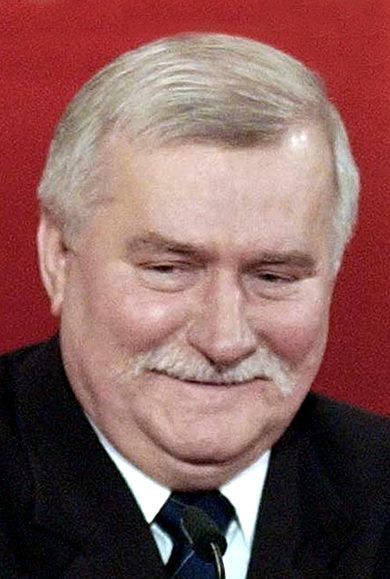
Former Polish president Lech Wałęsa has said he is not going to retract his remarks in which he called the current president Lech Kaczynski ‘an imbecile’. Other reports have Wałęsa calling him an idiot, blockhead and a fool.*

"I felt Lech Walesa's statement overstepped the bounds of permissible criticism of the head of state and was meant solely to malign the president," PAP news agency quoted member of parliament Jolanta Szczypinska as saying.

I guess what they really meant to say was that Walesa stepped over the line.

Poland is not the only place where politicians use defamation suits to silence critics. The government of Singapore is notorious for suing critics into jail or bankruptcy or otherwise out of political existence. Thailand's politicians are also keen to resorting to defamation charges where they can.

Even if they don't win their case, the costs of legal defence can be crippling.

In Poland, Thailand and Singapore, these defamation actions are pursued as criminal offences where jail time can and have been imposed on top of any monetary damages. In Poland, for example, you can go to prison for 3 years if you insult the head of state.

In Canada, defamation tends to be a civil matter where the worse that can happen is the award of monetary damages. That must be a great relief to some.

Defamation actions between politicians tend to be confined to nations where the democratic system is weak, disreputable or immature. Rarely do you see these actions in western mature democracies but while it can happen, these cases tend to be thrown out pretty early in the game because the benefit of the doubt is given to fair comment.

You see, in most mature western democracies, politicians learn that fair comment and the public interest in critical speech trumps any feeling of personal annoyance they might feel for getting called out. While they may publicly respond to charges in a clear and unequivocal manner, in the end they understand and accept that the true measure of their standing in the long run will not be the decision of a court judge but in the will of the electorate.

---------------------------
*I assume they were all the same incident but simply translated differently. Makes you admire what a colourful language Polish can be.

Monday, March 05, 2007

Quebec election seat predictor

There were a couple of these floating around last federal election and now Hill and Knowleton have a variation for this Quebec general election.

They are really cool toys if you are a hardcore political junkie.

We've heard it before

Another day and another story about how this province is hostile to business interests, economic investment and industrial development. These stories have been coming out from one source or another for almost as long as this government has held office.

They tend to spike right after the Williams administration undertakes some flurry of activity with respect to any of FPI, oil (Hebron and Hibernia South), or minerals (Voisey's Bay) among others.

National analysts, commentators or investment advisers will be quoted as wondering how serious this government is about attracting investment then the predicable government responses are trotted out. Sometimes it's a flat "we are standing up for the people of the province" but this time it was "it's just not true anyways".

In this case the government has tasked Business Minister Kevin O'Brien to try to repair our reputation.

The interesting part is that he went on VOCM Open Line to make his defence.

In fact, VOCM Open Line is the wrong audience; he should making his case where the out-of-province business audience is; out of province. To call VOCM Open Line was just a first-line knee-jerk attempt to stave off embarrassment in the local audience.

It doesn't matter how many open files he throws up in defence. The fact is that this province continues to be the only jurisdiction about which national stories currently circulate in the media that we are business-hostile.

And it's not like those who make make investment decisions in this country read a different media than the rest of us.

Reputation and image is what branding is all about. This government continues to fuel a brand that tells the world that this province is negative to economic investment. That's not the way to win in a globally competitive investment environment.

"No more giveaways" is rapidly becoming a joke codeword for "can't close the deal" and "can't play with others".

Saturday, March 03, 2007

Don't mention the war II

As mentioned previously, it seems like any questioning our genetic/historic right to take seals inspires a total shut-down of any common sense or perspective. We will come up with the most ridiculous and offensive over-the-top attacks on the anti-sealers in our efforts to justify our actions.

We can't help but play into their hands as they show us up as wild-eyed lunatics ready to club anything and anyone.

That brings us to the award of Runner-up for the next chauvinistic, short-sighted insensitive fool to break the silence and talk about how ungrateful those Germans were after all we did for them after the war and besides, those disgraceful people caused the Holocaust!

(Mr. William Rowe won the first-out-of-the-gate award on Thursday)

The envelope please. . . .

Mr. Wayne Osmond of the Table Mountains blog. In his winning entry he argues, illustrated by an image of the gates of Auschwitz that:
"The Germans are now becoming a part of a group that seems to want to enforce cultural GENOCIDE on our province (they actually use to have a monopoly on it at one time. old habits are hard to break)."
Congratulations to you, Mr.Osmond, for comparing the plight of NL sealers to that of a people who, thanks to a psychopathic and murderous regime, lost 6 million or more of their compatriots to poison gas, gunshot and starvation and then had their corpses disposed of in massive ovens.

You can rest assured that your hasty and ill-advised comparison of that human catastrophe to the recent banning of the import of an agricultural product by the government of Germany will be successful in offending Jews and right-thinking people everywhere and will do nothing to bring support to your side.

Let's see who will get an Honourable mention. After all, March madness is just beginning.

Now more than ever: A public inquiry

I have been ruthlessly consistent on one matter since this mess at the House of Assembly started to unfold - we need a public inquiry. And I still strongly believe we need one. In fact, I believe that today even more than ever, in spite of the fact that virtually every sitting politician and many of the local pundits pooh pooh the idea.

Why?

For one thing, there is a general misunderstanding, fostered by the government handling of this affair and then echoed by otherwise skeptical pundits (most notably Randy Simms, I'm sorry to say) that all these different events are separate and unrelated.

Government has treated and sold the different components of House of Assembly misbehaviors (an IEC run amok, overspent constituency allowances, misspending at staff-owned trinket companies etc) as if they had nothing to do with each other. Government's response of setting up separate and discreet mechanisms of investigation independent of each other has reinforced this illusion.

So while Justice Green examines compensation issues, the AG uncovers IEC bad judgment and the police look at gross overspending, who's tying all these matters together? And are they all tied together?

You bet they are tied together and don't ever let anybody tell you otherwise. Theses and other matters are tied together in three distinct ways.

First, it has been little acknowledged that the House of Assembly and related staff and the location where they all work is really a very very small place, physically and in numbers of people.

The number of people with decision making powers on the IEC would total far less than a dozen people over the 10 years these shenanigans went on. And the IEC is the body which approved spending as it went along and then later approved the substance of the accounts after the fact.

This puts the IEC at the center of each and every scandal revealed so far. And it was not one IEC that overlooked the sales to staff-owned firms and another which presided over gross constituency allowance overspending. It was, essentially, the very same IEC which had largely the same representatives (Byrne, Sullivan, Rideout, Parsons, Tulk and others) for remarkably very long periods of time.

Second, it is a very small set of staff which overlooked all the financial aspects of the House of Assembly. Any staff allegedly involved in malfeasance are the very same staff which advised the IEC that it would have been OK to take more money from one line item to their own pockets. In fact, it would have been the same staff overlooking the books at the AG who could have advised the IEC that it was OK to threaten a budget cut if the AG's office didn't come into line.

These staff were important advisers to the IEC on House financial affairs and we cannot assume that their advice was not tainted and disinterested.

Because the staff is so small, so prominent within that organization, so consistent over long periods of time and thereby so close to their political masters, the line between them blurs. The idea that politicians were victims of a heartless system (a la Kathy Goudie) is self-serving to put it most charitably.

Finally, this is a tangly mess in which many the players overlap the many different individual scandal items. That's because that's the kind of place the institution of the House of Assembly is: close, tight-knit across party lines and staff-politician lines, incestuous and clearly out of touch with the real world.

A culture of fundamental self-interest has developed within this small family of staff and politicians and it has harmed the practice of politics, democracy and public policy for the province as a whole. To make the case that all these items of poor judgment or potential criminal action are unrelated and separate is to draw artificial and arbitrary lines which are pure and convenient fiction.

So it is little surprise that the best the Liberal caucus can come up with after several days is the considered opinion that:
"Finally, with respect to the issue of holding a public inquiry into the operations of the House of Assembly. Our caucus feels that this may be a valid process, however, we feel that consultation should take place with the Auditor General and Chief Justice Derek Greene to figure out whether they feel a public inquiry would access additional information and assist in their ongoing activities. There needs to be a definitive goal as to what this inquiry could accomplish, and we feel that both the Auditor General and the Chief Justice would be in the best situation to judge whether this inquiry would be of benefit and provide new information to the general public."
In other words, a public inquiry if necessary but not necessarily a public inquiry. And even then we think it's a good idea only if others already do.

Way to go.

Clearly the Liberal caucus have decided to take themselves out of the game on this issue and it's just as well. Their suggestions on reforms going forward are fine as far as they go but on the issue of what has happened so far they close ranks with their colleagues on the other side.

Most offensive is Tory Caucus Chair Bob Ridgley's response to the Liberal proposals that “This is almost akin to asking the foxes to have a meeting to discuss security at the henhouse,” and his insistence that that the decision to kick the auditor general out of the legislature was made during the Tobin years, when there was a majority of Liberal MHAs on the IEC.

This flys in the face of the record which clearly shows that there were also two Tory members on the IEC when that happened and that the law change confirming the decision to eject the auditor general passed the legislature unanimously.

There is plenty of blame to go around.

The problem is that government and opposition have been more concerned day after day with "managing the issue" through various forms of damage control and in throwing the responsibility to to any shoulders than their own than getting to the bottom of the matter.

Why has the Premier been so intent on a policy of containment? He has to be given the credit for bringing in the AG in the first place (no doubt against the wishes of some of his most senior ministers - Ed Byrne for one) but I have no doubt that he had no idea of the magnitude of what was going on.

On that basis, credit only goes so far.

It is in the responses to allegations where credit is earned and so far his response ha been a mixed bag. As the information comes out, the premier himself finds himself in a conflict between getting to the bottom of the matter and sacrificing one senior minister after another who was at the center of IEC decisions (Byrne, Sullivan, Rideout et al) on one hand and the simple preservation of his administration's ability to govern on the other.

As revelations continue to be released (and make no mistake, there will be many more to come), Premier Williams is running out of fingers to stick in the dike, if he hasn't already.

In any case, the Premier is no longer a disinterested revealer of past events before his time and has not been for a while. When the bonus payments were revealed, for example, Premier Williams himself waffled on what he knew and when he knew it.

And let's not even mention the fact that Sullivan had the AG's report on these secret bonuses, which he approved as a member of IEC, on his desk when he decided to resign.

Funny he never mentioned that on his way out.

It's time to take all of this mess out of the hands of the politicians. The Liberal caucus has firmly passed the buck to others in an astonishing display of political cowardice and self-interest so their opinions on this matter have to be taken for what they truly are - irrelevant.

Government and Premier Williams have to break the mindset that these are issues to be managed and wake up to the fact that these are matters to be untangled in a systematic, objective, disinterested and comprehensive public inquiry so we can all find out who made what decisions when and who knew about it so this kind of thing can't happen again and those persons and institutions responsible are identified .

We deserve that; it's our money.

Heading North

This my time of the year to head back to Iqaluit. Their territorial Legislature is opening again this Tuesday so on Monday morning I fly back up.

While my view of local affairs might be more virtual than direct, my posts will be as regular or perhaps even more frequent.

Meanwhile, I look forward to the -20c to -30c air crystallizing my lung tissue.

TownieBastard: I'll give the Timbits another crack.

Thursday, March 01, 2007

Don't mention the war

If you ever saw the episode of Fawlty Towers where the German tourists were buzzed about by owner Basil Fawlty and Basil desperately trying to not offend and telling everyone not to mention the war and Hitler, you'll get the reference.

So when Scott Simms, MP, comes up with the inspired notion of launching a ban against German agricultural products (deer related stuff of some kind) in response to their recent vote to ban sealing products from Canada, it was just a matter of time.

I held my breath. Who would be the first chauvinistic, short-sighted insensitive fool to break the silence and talk about how ungrateful those Germans were after all we did for them after the war and besides, those disgraceful people caused the Holocaust!

And the winner is. . . Mr William Rowe, former provincial cabinet minister, former Leader of the Opposition and Rhodes Scholar extraordinaire on his very own radio call-in show (Back Talk - Radio with Attitude) this very afternoon.

Believe it or not.

Even Minister Rideout, with rare presence of mind and uncharacteristic restraint, only called the German position hypocritical.

OffalNews blocked in China

It turns out that if you happened to be traveling in China and wanted to check for the latest musings on OffalNews you'd be out of luck.

That's because OffalNews has been deemed by the government of China too dangerous for general public viewing.*

I'd like to say that it's personal, that I somehow offended the Beijing powers-that-be with some scathing post. I'd get some comfort if I knew it was because when I was there in 1984 that I had picked a fight with some lackey who has now risen to a position to get me back.

I would be proud of the fact that I was considered sufficiently dangerous and subversive to billions of Chinese and the oldest civilization in the world to merit this special treatment if only that was the case.

Alas, it's not personal at all.

It turns out it's just a manifestation of the Great Firewall of China. This firewall is a government policy and programme to make sure that certain classes of websites (ie western news media sources and blogs) and certain internet search engine keywords (ie democracy or Tienamen Square) are systematically blocked or redirected.

The idea is to prevent access to these sites, information and ideas by computers and people within China.

That's what happens when you have a government determining what lines one can cross.

If you want to test which of your favourite sites can be viewed by the billions of Chinese who might want to, see www.greatfirewallofchina.net.

----------------------------------------------------------

I was wondering why my hit counter wasn't reflecting the billions of page views that it should be - now I know why.